






What Is Soft 17 in Blackjack? Hit vs Stand Rule Guide
Most players look only at their cards and miss the rule that controls the dealer’s strength. In other words, we mean the soft 17 rule, one of the most important.
When ignored, it can weaken good play and lower expected returns. But if players understand it, they can tighten their strategy, pick stronger tables, and protect their edge over time.
So, what is soft 17 in Blackjack? Our guide covers everything about the rule, why it matters, and how it affects real decisions at any Jackpot.bet table.
What Is Soft 17 in Blackjack?
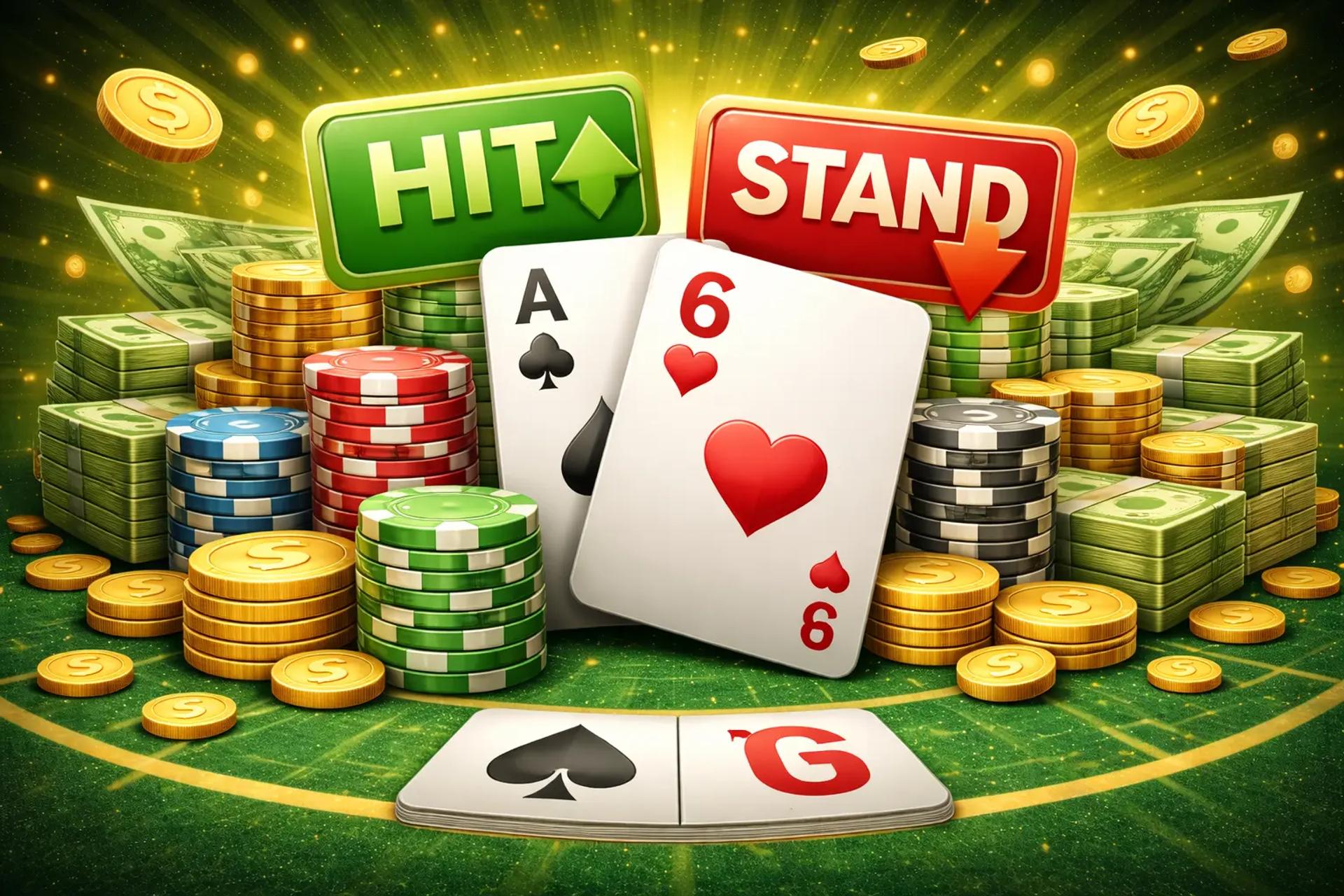
In Blackjack, a few rules shape outcomes more than the soft 17 rule. A soft 17 is any hand that totals 17 with an Ace counted as 11, such as A-6.
The Ace can shift to 1 when needed, which changes how dealers and players approach the next card.
Casinos set their own rules for this hand. Some dealers hit, others stand, and that single choice changes the house edge.
How Soft 17 Works in Blackjack
A Blackjack soft 17 can’t bust with one more card, which makes it a turning point for both players and dealers.
When you hold A-6, the Ace counts as 11 until the total goes over 21, then shifts to 1 automatically. The flexibility means a soft 17 behaves more like a 7 than a 17; it’s a weak total unless improved.
For dealers, though, the rule decides everything. Some casinos force the dealer to hit on soft 17 (H17), others require a stand (S17).
That single change alters how often the dealer improves or busts, which directly affects your expected return.
Dealer Rules: Hit vs Stand on Soft 17
At first glance, the soft 17 Blackjack rule looks minor, but it completely reshapes how the game unfolds.
Every table posts this rule somewhere, usually printed on the felt or displayed digitally. It determines how the dealer must play the hand.
When the dealer stands on soft 17 (S17), they stop at A-6, which keeps the total at 17. When the dealer hits on soft 17 (H17), they draw another card in hopes of improving to 18 or higher.
That one hit might sound harmless, but the math says otherwise. A dealer who hits on soft 17 wins slightly more often, which increases the house edge by about 0.2 to 0.3%.
Due to this, games where the dealer stands are always better for the player. On Jackpot.bet, you’ll often find both versions available. Check the difference before you play; it determines how long your balance holds up.
How Soft 17 Affects House Edge and Player Odds
When the dealer hits on soft 17, the small advantage shifts sharply toward the house. The extra draw gives the dealer more chances to reach totals of 18 through 21 and fewer opportunities to bust.
As a result, that change adds roughly 0.2-0.3% to the house edge, enough to erase long-term gains for players who ignore it.
However, at tables where the dealer stands on soft 17, your hands hold a stronger value. Strategies like doubling on 10 or 11 or standing on 12-16 against weak upcards perform better because the dealer stops earlier.
So, when you are on Jackpot.bet, choose a table labeled “Dealer Stands on Soft 17” to potentially improve your odds immediately.
How to Play Soft 17 as a Player
For players, Blackjack soft 17 looks safer than it is. The hand’s flexibility makes it easy to overestimate its strength, but the odds say otherwise.
When you hold A-6, you should hit because 17 rarely wins against an active dealer. The only exception comes when the dealer shows 3 through 6. In those cases, doubling down adds value since the dealer is in a weaker position.
If you face 7, 8, 9, 10, or Ace, hit until your total improves. An early stand converts a playable hand into a slow loss. In short, treat soft 17 as a chance to build upward, not a finish line.
Exceptions & Rule Variations to Watch
Blackjack tables don’t all treat soft 17 the same way, and those rule shifts matter more than most players realize.
In multi-deck games, the house edge climbs slightly compared to single-deck versions, especially when the dealer hits on soft 17.
Some casinos also restrict doubling on soft totals, which limits chances to maximize A-6 or A-7.
European or no-hole-card games add another wrinkle: the dealer doesn’t check for Blackjack until the end of the round.
In that setup, doubling or splitting against an Ace or 10 becomes riskier because you could lose extra chips instantly.
That said, always check the table placard before you play on Jackpot.bet, it lists every soft 17 conditions that can tilt the math in or against your favor.
Jackpot Bet’s Practical Tips When You See Soft 17
You should always review how a table handles soft 17 Blackjack before placing a bet. Check the felt or digital display first; if it says Dealer Hits on Soft 17 (H17), tighten your play.
In that case, use smaller wagers, skip risky doubles, and expect the dealer to hold stronger totals more often.
Conversely, when the table shows Dealer Stands on Soft 17 (S17), you can play with more confidence. A double on 10 or 11 adds value, and standing on borderline totals becomes safer.
Conclusion
The soft 17 Blackjack rule may look minor, but it shapes how every round unfolds. When dealers hit on soft 17, the house edge rises, and strategy tightens.
When dealers stand, the pace slows, and players gain more control. Check that rule before you play; it might instantly improve decisions and help you choose stronger tables.
Each casino runs its own version of this rule. So players who know what is a soft 17 in Blackjack walk in prepared, with sharper judgment and a better grasp of how to keep the odds closer to even.
Frequently Asked Questions
What is a soft 17 in Blackjack?
A soft 17 is any hand totaling 17 with an Ace counted as 11, such as A-6. Because the Ace can shift to 1, it’s a flexible hand that rarely busts with one extra card.
Why does the dealer hit or stand on soft 17?
Casinos set this rule to control the house edge. When the dealer hits on soft 17 (H17), the house edge increases slightly.
When the dealer stands (S17), players get a better return.
How should players treat a soft 17 hand?
Players should hit most of the time because soft 17 is too weak to win consistently. A double against a dealer’s 3-6 can add value if the rules allow it.
Does the soft 17 rule change Blackjack strategy?
Yes, some Blackjack strategy chart decisions, especially doubles on 10, 11, and soft totals, shift depending on whether the dealer hits or stands on soft 17.
Always check the table rule before betting on platforms like Jackpot.bet.