






American vs European Roulette: House Edge Difference 2026
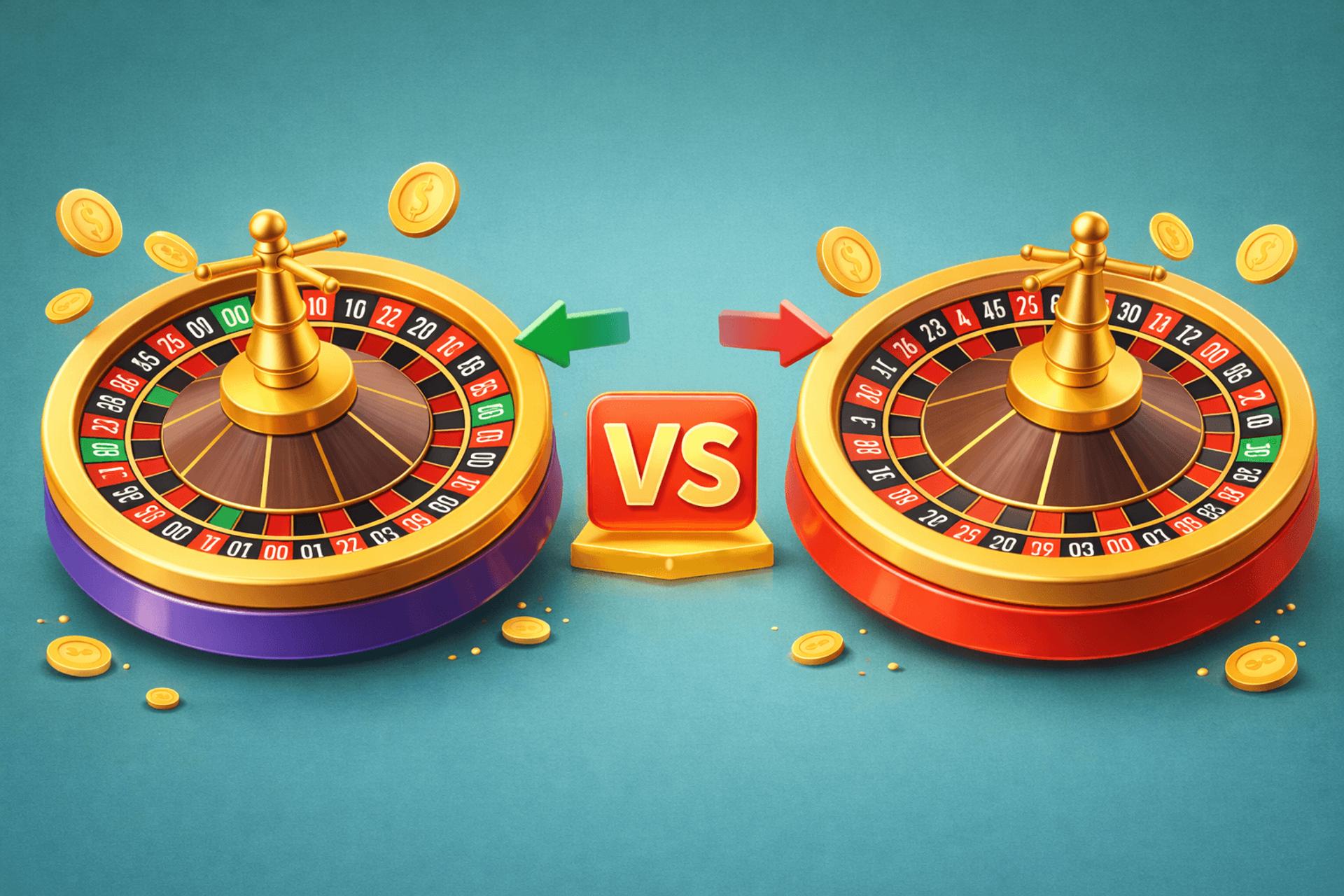
Roulette may look identical across tables, but the wheel itself changes the cost of every spin. When players compare American vs European Roulette, the key factor is the house edge hidden behind the zero pockets.
One version keeps losses lower over time, while the other quietly accelerates bankroll drain.
In 2026, this distinction matters for anyone who plays Roulette seriously. The rules, betting layout, and payouts stay the same, yet the math does not. A single extra zero is enough to double the casino’s advantage.
On Jackpot.bet, where several Roulette variants and stake levels are available, choosing the right wheel supports longer sessions, smarter betting systems, and more efficient bankroll control.
Which Roulette Has the Lower House Edge?
If the goal is to minimize long-term losses, European Roulette is the better option. It uses a single-zero wheel, which gives the casino a 2.70% house edge.
In contrast, American Roulette includes both a 0 and 00, pushing the house edge up to 5.26%.
That difference may look small at first glance, but it compounds quickly. Over dozens or hundreds of spins, American Roulette costs almost twice as much per dollar wagered.
The payouts stay identical across both versions, so the extra zero delivers no benefit to the player.
For anyone playing Roulette on Jackpot.bet, this simple distinction matters. Choosing a single-zero table immediately improves efficiency, supports conservative betting systems, and helps bankrolls last longer without changing how the game is played.
What the House Edge Really Means in Roulette
The house edge represents the average amount the casino expects to keep from every bet over time.
It does not predict short-term results, but it defines the long-run cost of playing a game. In Roulette, that cost comes entirely from the green zero pockets on the wheel.
Each time you place a bet, Roulette payouts are calculated as if those zero slots do not exist. When the ball lands on zero, most bets lose, and that gap between true odds and paid odds becomes the casino’s advantage.
A higher house edge means your bankroll declines faster as the number of spins increases. A lower edge slows that process and gives variance more room to work in your favor. This is why table selection matters more than Roulette strategies or betting systems.
On Jackpot.bet, where spins are fast and sessions can add up quickly, choosing a lower-edge Roulette variant directly improves session length and bankroll efficiency, even when using the same bets and stake sizes.
European Roulette Explained (Single-Zero Wheel)
European Roulette uses a wheel with 37 pockets, numbered from 0 to 36. The single green zero is the only element that gives the casino its edge. All other numbers are red or black and follow the same betting layout used across Roulette tables worldwide.
Because there is only one zero, the house edge settles at 2.70% on standard payouts. This applies to most common bets, including red or black, odd or even, dozens, columns, and inside number bets. The bet type changes volatility, not the underlying cost of the game.
From a bankroll perspective, the single-zero wheel is efficient. Losses accumulate more slowly, which supports flat betting, conservative staking, and longer sessions.
That’s why European Roulette is often paired with basic Roulette strategies focused on low risk and steady play.
On Jackpot.bet, single-zero Roulette tables are the preferred choice for players who value controlled betting systems and disciplined bankroll management without changing how Roulette is played.
American Roulette Explained (Double-Zero Wheel)
American Roulette looks almost identical to its European counterpart, but the wheel includes 38 pockets instead of 37.
Alongside numbers 1 to 36, it features two green slots: 0 and 00. That single addition changes the math significantly.
With two zero pockets in play, the house edge rises to 5.26% on standard payouts. The betting layout, odds, and rules remain the same, yet the extra zero increases the frequency of losing outcomes across nearly every bet on the table.
This higher edge affects all Roulette strategies equally. Flat betting, progression systems, and inside or outside bets do not offset the added cost. Over time, bankrolls face nearly double the expected loss compared to a single-zero wheel.
American Roulette still offers the same pace and excitement, but from a value standpoint, the double-zero design makes it a less efficient option for extended play and structured betting systems.
The Math Behind the Difference (With Simple Examples)
The gap between American and European Roulette becomes clear once you translate percentages into real money. The house edge tells you how much you give up, on average, for every dollar wagered over time.
Take a simple scenario: you bet $10 per spin for 100 spins. That’s $1,000 in total wagers.
On a European Roulette wheel with a 2.70% house edge, the expected loss is about $27. On an American Roulette wheel with a 5.26% house edge, the expected loss jumps to roughly $52.60.
The difference is more than $25 over the same number of spins, using the same bets and rules.
The effect becomes even clearer on even-money bets like red or black. These bets feel close to 50/50, but the zero pockets tilt the balance. One zero already shifts the math against you; adding a second zero nearly doubles that tilt.
Over longer sessions or repeated play, the extra zero does most of the damage. This is why table selection outweighs betting systems when cost control matters.
Outside Bets vs Inside Bets - Does the House Edge Change?
Many players assume certain Roulette bets are “safer” because they win more often. Outside bets like red or black, odd or even, and high or low do hit frequently, while inside bets on single numbers feel riskier. The hit rate changes, but the house edge usually does not.
On standard Roulette tables with normal payouts, almost every bet carries the same house edge for that wheel type.
The Roulette payouts are adjusted to match probability minus the zero pockets. As a result, betting red or black on a double-zero wheel costs the same, over time, as betting a straight-up number on that same wheel.
What does change is volatility. Outside bets produce smaller swings and smoother sessions, which suits flat betting and conservative bankroll plans.
Inside bets create larger swings, faster wins, and faster losses, even though the long-term cost remains identical.
This distinction explains why Roulette strategies focus on variance control rather than edge reduction. The wheel determines the cost. The bet choice only determines how bumpy the ride feels.
French Rules in 2026: When the House Edge Drops
Some Roulette tables apply special rules that soften the impact of the zero, but only on even-money outside bets. The two most common are La Partage and En Prison, and both appear on single-zero wheels.
With La Partage, if the ball lands on zero while you’re betting red or black, odd or even, or high or low, you lose only half of your wager instead of the full amount.
En Prison works slightly differently: your even-money bet is “imprisoned” for the next spin, and it either returns to you if it wins or is lost if it fails.
Both rules reduce the house edge on those even-money bets from 2.70% to about 1.35%. That is one of the lowest costs available in Roulette without changing the core game. Inside bets and higher-payout wagers are not affected, so the benefit applies only when playing outside bets.
For players who prefer simple Roulette strategies built around red or black and steady staking, these rules materially improve long-term efficiency. They reward patience and bankroll discipline rather than aggressive betting systems.
2026 Table-Spotting Checklist: How to Avoid Paying Extra Edge
Roulette tables may look similar, but small details decide how expensive each spin becomes. Before placing a bet, it pays to scan the table or game information carefully.
Start with the wheel layout. A single green zero signals European Roulette. Two green pockets marked 0 and 00 indicate American Roulette. If you see 0, 00, and 000, you’re looking at a triple-zero wheel with a much higher cost per spin.
Next, check for rule modifiers. Roulette terms like La Partage or En Prison usually appear on the table felt or in the game rules. These apply only to even-money bets, but they meaningfully lower long-term losses.
Finally, consider bet limits and pace. Faster games increase total wagers per hour, which magnifies the effect of a higher house edge. Lower limits and controlled spin speed support bankroll management and reduce unnecessary exposure.
A few seconds of table selection can save more money than any Roulette betting system ever will.
Frequently Asked Questions
What is the house edge in European Roulette?
European Roulette uses a single-zero wheel with 37 pockets. On standard payouts, the house edge is 2.70%, making it one of the lowest-cost versions of Roulette available.
What is the house edge in American Roulette?
American Roulette includes both a 0 and 00, for a total of 38 pockets. This increases the house edge to 5.26%, which is nearly double that of European Roulette.
Do Roulette betting systems reduce the house edge?
No. Betting systems change how wins and losses are distributed, but they do not alter the house edge. The wheel and its zero pockets determine the long-term cost of the game.
Do inside bets or outside bets have better odds?
Both carry the same house edge on standard tables. Outside bets win more often with smaller payouts, while inside bets win less often with larger payouts. The difference is volatility, not cost.
Is triple-zero Roulette worse than American Roulette?
Yes. Triple-zero Roulette has a 7.69% house edge, making it significantly more expensive than both European and American versions. Players focused on value should avoid it.