






Fibonacci Betting System: Does This Sequence Strategy Work?
Many players look for a smarter way to manage their bets, and the Fibonacci betting system often stands out as one worth trying.
Inspired by the famous mathematical sequence, it adds a clear pattern to how stakes rise and fall after each result. The appeal comes from its logic: every step has a reason, and every move feels calculated.
Some gamblers see that structure as a reliable way to stay organized through wins and losses. Yet the results don’t always match the promise.
To understand why it divides opinion, we will explain how the system actually functions and the potential advantages.
What Is the Fibonacci Betting System?
The betting system is a structured staking method based on one of the most famous mathematical sequences in history.
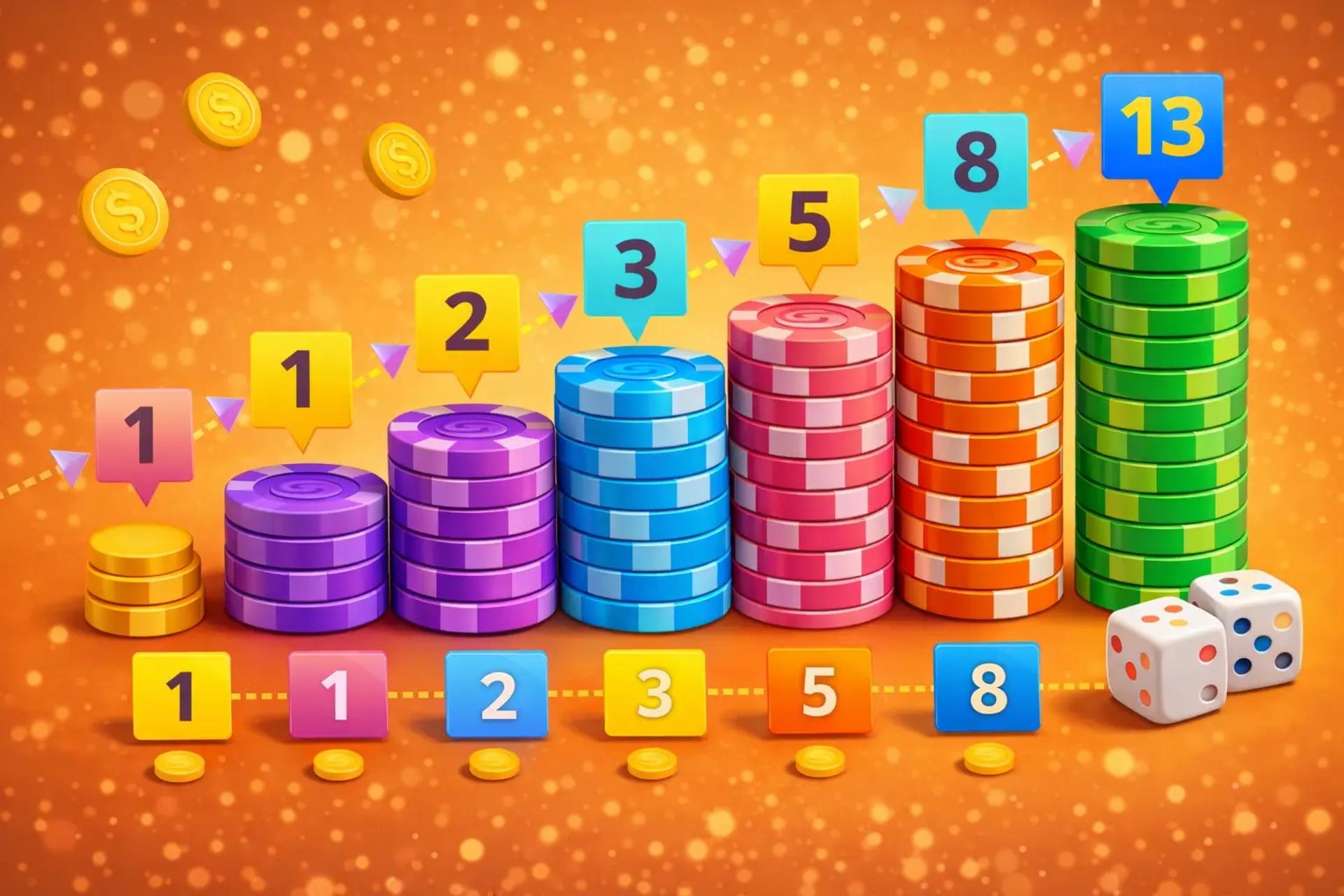
Simply put, each number in the Fibonacci sequence equals the sum of the two before it: 1, 1, 2, 3, 5, 8, 13, and so on.
The pattern appears everywhere, from nature to finance. And in gambling, it translates into a plan for adjusting bet sizes after a loss.
Instead of betting the same amount each time, the player moves one step forward in the sequence after a loss and moves back two positions after a win.
Because the wager increases following a loss, it falls under what’s called a negative progression system. It is a method designed to regain lost bets by slowly raising the stake with each step.
How Does Fibonacci Betting Work: Step-by-Step Guide
The Fibonacci betting system follows a simple pattern that any beginner can apply with basic math. It builds on the idea that each wager depends on the outcome of the last one.
Choose a “Unit” and Setup
First, you need to define a single betting unit; the smallest base amount you’re comfortable with. For example, if your bankroll is $100, a $1 or $2 unit works well.
Each step in the Fibonacci sequence represents how many units you wager, not actual currency. A consistent base keeps the system easy to follow.
Rules for Advancing the Sequence (After Loss)
After a losing bet, move one step forward in the Fibonacci sequence gambling. If you lose your $1 bet, your next stake becomes $1 again, then $2, $3, $5, and so on.
The purpose is to slowly increase wagers in a measured way rather than doubling, as in the Martingale system.
Rules for Retreating (After Win)
When you win, move two steps back in the sequence. If your last bets were $3 and $5 and you win on $5, your next bet drops to $2.
Such a backward step helps lock in part of the recovery while preventing the stakes from growing too fast.
Simple Example Scenario (With Small Unit, Even-Money Bets)
Imagine you’re playing roulette and betting on red with a $1 unit. The sequence goes like this:
|
Round |
Bet (Units) |
Result |
Next Bet |
Notes |
|
1 |
1 |
Lose |
1 |
Move one step forward |
|
2 |
1 |
Lose |
2 |
Continue forward |
|
3 |
2 |
Lose |
3 |
Continue forward |
|
4 |
3 |
Win |
1 |
Step back two positions |
|
5 |
1 |
- |
- |
Sequence resets |
Where You Can Use It
The Fibonacci betting strategy is best used on bets with near even money. Roulette is the most common example, where you use it on red or black, odd or even, and high or low.
It can also work on simple win or lose sports bets or basic blackjack hands where the payout is nearly 1:1.
It doesn’t work well on bets with changing odds or complex outcomes, like parlays or prop bets. Since the sequence is based on steady returns, uneven payouts break the sequence.
Like all staking systems, Fibonacci also has real-world limits. Table caps, minimum bets, and limited bankrolls can stop the sequence before a recovery happens.
Potential Advantages of the Fibonacci System
Many players find the Fibonacci approach appealing because it adds structure without the high pressure of faster progression systems. Here are some of its main strengths:
-
Slower bet growth than Martingale: Instead of doubling after every loss, the system raises bets step by step.
-
Clear and structured approach: Each move follows a simple rule, which helps players stay consistent and avoid impulsive reactions.
-
Chance to recover short losing streaks: When a win comes after a few losses, the sequence often makes up earlier bets and adds a small gain.
-
Lower stress: Gradual bet increases make losses easier to handle.
Risks, Limitations & Why It Doesn’t “Beat” the House
Many players are drawn to Fibonacci sequence betting because it looks mathematical and safe, but the numbers only go so far. Long losing streaks are the biggest danger, as even small bet increases can drain a bankroll faster than you think.
The sequence can’t go on once the max bet is reached. The real issue is the house edge.
No sequence or formula can get rid of it. And every casino game is designed to protect that advantage.
Even when results seem balanced over a few rounds, the expected value is negative in the long run. Plus, add in human factors like fatigue, mistakes, or emotional reactions, and the system breaks down long before the math does.
Empirical & Mathematical Analysis
Math and simulations have shown the Fibonacci system is no better than pure chance in the long run. Gambling mathematics research confirms the same; a higher bet size may delay losses, but it cannot prevent them.
The appeal is in how balanced and logical the sequence looks. But probability never adjusts to the pattern.
In most simulations, the outcome follows a familiar path. Short winning streaks give the illusion of progress and create moments where the system seems to work.
Yet one long losing streak wipes out all those gains. Once the bets exceed the bankroll or table limits, the sequence breaks down.
In the end, the idea of “guaranteed recovery” doesn’t hold up in real life. Chance, restrictions, and risk always outweigh mathematical design.
Jackpot Bet’s Tips for Beginners
Anyone interested in experimenting with the Fibonacci system should focus on safety and control rather than profit. Here are our best tips:
-
Set strict bankroll and stop-loss limits. Always decide in advance how much you’re prepared to lose.
-
Limit the depth of the sequence. Do not chase losses too far down the line, as bets can rise quickly.
-
Use a smaller betting unit. Keep your base wager low compared to your total bankroll to extend playtime.
-
Check table limits before playing. The system fails if you hit the maximum bet before a win arrives.
-
Treat it as entertainment. The Fibonacci approach can add structure and excitement, but it’s not a path to guaranteed profit.
Does the Fibonacci Strategy Work?
The Fibonacci strategy might appear effective in the short run, especially during mild losing streaks or when a win lands early in the sequence. Under perfect conditions, it may help a player recover small losses and even walk away with a modest profit.
However, those results are temporary. The system still depends on luck, not probability shifts, and sooner or later, a long string of losses exposes its limits.
It’s far from a foolproof method; more of a structured way to manage bets than a true advantage.
Players who enjoy the method can pair it with safer habits such as flat betting, value-based wagering, or strong bankroll management.
Conclusion
The Fibonacci betting system offers structure, patience, and a sense of order. But no sequence can erase the house edge.
It may bring brief winning runs, yet over time, the odds always return to favor the casino. The best approach is informed play: to get to understand the math, set limits, and know when to walk away.
On Jackpot.bet, you can explore more betting strategies, risk management guides, and expert insights designed to help you play smarter, not harder.
Frequently Asked Questions
Is the Fibonacci betting system legal to use in casinos?
Yes, the Fibonacci betting system is completely legal because it’s a staking method, not a tool that changes game outcomes.
Casinos allow it as long as players follow table limits and standard rules.
Can the Fibonacci strategy guarantee profits in gambling?
No betting system can guarantee profit. The Fibonacci strategy may help manage bets more calmly, but the house edge remains the same.
Over time, luck and probability determine the results.
What games work best with the Fibonacci system?
The system works best on even-money bets such as red/black or odd/even in roulette. It can also apply to simple win-lose wagers in sports betting or blackjack hands with even payouts.
Players can try the system on the Jackpot.bet across these games in a controlled setting.
Is Fibonacci betting better than Martingale?
Fibonacci betting grows stakes more slowly than Martingale, which makes it less risky in short sessions. However, both face the same limitation; neither can beat the odds in the long run.