Labouchere Betting System: Does This Complex Strategy Work?
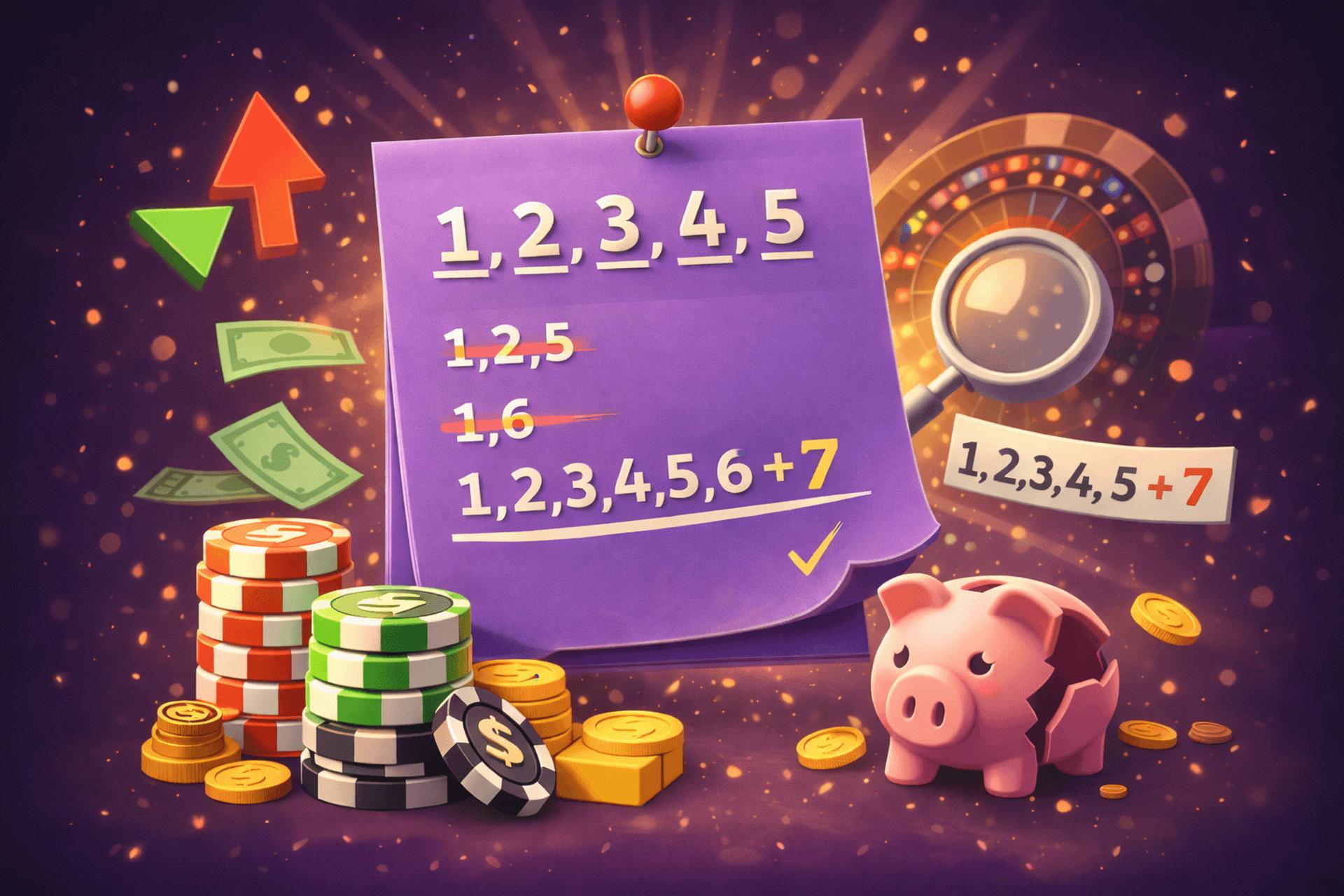
The Labouchere system is a staking plan for even‑money bets. Write a sequence that sums to a target profit, bet the first + last numbers, cross them off on a win, and append the stake on a loss.
On Jackpot.bet, you may try using the system manually, but the math shows it can’t overcome long‑term game variance.
So, we will discuss how it works, what the math says, and, most importantly, if this complex strategy actually works.
How the Labouchere Strategy Works
The Labouchere strategy (also called the cancellation system) is just a way of structuring your bets.
You start by deciding how much profit you’d like to make and writing a list of smaller numbers that add up to that amount. Each bet equals the first and last number in your list.
If you win, you cross those two numbers off. If you lose, you add the lost stake to the end of the list.
The process keeps going until you clear the list, or your bets grow too large to continue.
Why Many Players Believe It Works
On the surface, the betting system feels logical. You see your list shrinking with each win, and it looks like you’re steadily moving toward your target profit.
This “crossing off” effect creates a sense of progress, which can be reassuring during play. Short sessions often end with small wins, reinforcing the belief that the method works.
The structure also gives players a feeling of control compared to random bet sizing.
In reality, though, long losing streaks still wipe out many small wins. And the system cannot change the house edge or the true odds of the game.
The Math Behind It: Why Edge Doesn’t Change
Every spin of the roulette wheel or even‑money bet in sports is independent. The probability of red doesn’t rise just because black has appeared five times in a row.
It means the Labouchere strategy cannot alter the underlying chance of winning. Over time, your expected loss is the house edge multiplied by your total amount wagered, no matter how you arrange the stakes.
However, what the Labouchere system does affect is volatility: It can produce many small wins followed by rare but large losses.
Risks, Bankroll, and Table Limits
Because the Labouchere system increases your stake after losses, the size of your bets can balloon quickly during a cold streak.
Here, theory meets practice. In practice, you have a limited bankroll, and casinos impose maximum table limits.
Once your required stake exceeds either your available funds or the table’s ceiling, you can no longer complete the sequence. That unfinished line locks in a large loss and wipes out many smaller wins.
Variations: Reverse Labouchere & Hybrids
Some players flip the script with a “Reverse Labouchere” system. Instead of adding losses to the line, you add wins.
After each win, you append the stake to the end of the list, hoping to build bigger profits in a hot streak while limiting losses. It changes the risk curve but not the underlying odds: the house edge stays the same.
Another approach is hybrid systems. They combine parts of the standard and reverse methods, but all share the same math problem.
They can shift how quickly your bankroll rises or falls, yet they can’t turn a negative‑expectation game into a positive one.
Trying Labouchere on Sports Bets
People sometimes apply the Labouchere system to near‑even sports markets like point spreads or totals.
The idea is the same: a sequence of numbers, first plus last stake, cross off wins, and add losses. The difference is that sports odds usually include a house margin (the “vig”).
For example, at -110, you must win about 52.4% of the time just to break even. A staking plan can’t remove that margin.
It can change how your bankroll fluctuates, but it won’t turn a losing bet selection into a profitable one.
Jackpot Bet’s Practical Tips If You Try It
If you still want to experiment with the Labouchere strategy, treat it as a way to manage stakes, not as a system to beat the odds.
Start with very small unit sizes and set a firm stop‑loss so a losing streak can’t escalate your bets beyond what you’re comfortable risking. Decide on a maximum number of steps or a maximum stake before you begin and stick to it.
Also, use games with the lowest house edge you can find, and remember that no betting pattern can change the underlying probability.
These safeguards won’t make the system profitable, but they might keep it from draining your bankroll too quickly.
Conclusion
The Labouchere system is an interesting way to structure bets, but it is not a shortcut to guaranteed profits.
It can give players a sense of order and sometimes produce small session wins, yet the underlying house edge remains unchanged.
Losing streaks, bankroll limits, and table caps all undermine the promise of recovering losses.
If you call it the Labouchere betting system or the Labouchere strategy, the math stays the same: it’s a staking plan, not a winning formula.
Use it only if you enjoy the structure, and always within limits you can afford.
Frequently Asked Questions
Is the Labouchere system legal to use in casinos?
Yes, it’s simply a betting pattern, not a device or cheat; casinos allow it. But like any system, it doesn’t change the house edge.
Can a very large bankroll make the Labouchere betting system profitable?
No, a huge bankroll may let you complete more sequences, but the underlying negative expectation still applies. You’re just delaying the inevitable large loss.
Does the Labouchere strategy work better online or in live games?
There’s no difference in the math. Online and live bets both have the same probabilities.
So, the outcome depends on luck and limits, not the platform.
Is the Reverse Labouchere safer than the regular version?
It has a different risk profile, potentially bigger wins during hot streaks, but it still can’t beat the house edge. The risk of a sudden downswing remains, even on platforms like Jackpot.bet.