Understanding 21+3 Blackjack: From Flush to Suited Trips
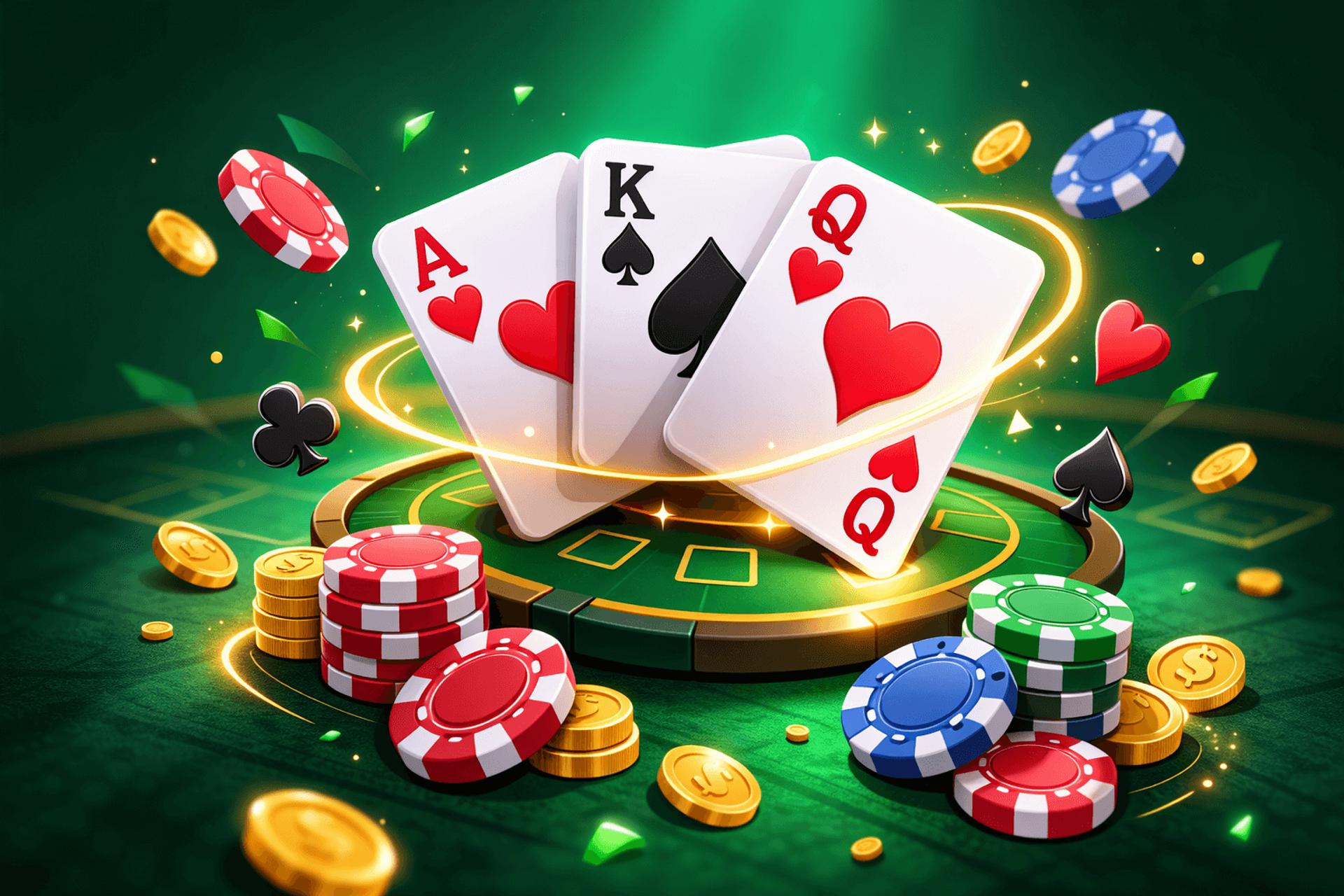
21+3 Blackjack adds a poker-style twist to a standard Blackjack hand. Instead of focusing only on beating the dealer, this side bet uses your first two cards plus the dealer’s upcard to form a three-card poker result. A flush, straight, or even suited trips can pay instantly, regardless of how the Blackjack hand ends.
In 2026, 21+3 remains popular because it resolves fast and delivers high-variance payouts. At the same time, costs vary widely based on the paytable.
On Jackpot.bet, where multiple Blackjack variants and side bets appear at different limits, recognizing how 21+3 works helps you decide when it adds value and when it quietly drains bankroll.
What Counts as a Win in 21+3
The 21+3 side bet ignores the final outcome of your Blackjack hand. It looks only at three cards: your first two cards and the dealer’s upcard.
Those cards are evaluated as a three-card poker hand, and if they match one of the winning combinations, the bet pays immediately.
Here’s the standard winning order, from lowest to highest value:
-
Flush - all three cards share the same suit
-
Straight - three consecutive ranks (for example, 6-7-8)
-
Three of a Kind (Trips) - all three cards share the same rank
-
Straight Flush - a straight where all cards share the same suit
-
Suited Trips - three of a kind, all in the same suit
Not every table offers every payout level. Some remove suited trips entirely or reduce payouts on higher hands.
That posted paytable is what determines the true cost of the 21+3 bet, not how often the hands appear. This makes 21+3 simple to follow, but highly dependent on table rules rather than play decisions.
How 21+3 Works at the Blackjack Table
The 21+3 wager is placed before any cards are dealt, in a dedicated side-bet circle next to your main Blackjack bet. Once the cards come out, the result is decided immediately using only three cards: your two initial cards and the dealer’s upcard.
Nothing else matters for this bet. Hits, stands, doubles, splits, and even the dealer’s final total have no effect on the outcome.
If the three-card combination forms a qualifying hand, the bet pays according to the posted paytable. If not, the wager loses, even if you go on to win the Blackjack hand itself.
Because the bet resolves instantly, 21+3 often feels disconnected from the rest of the game. That’s intentional. It runs on separate math, separate payouts, and separate risk. The main Blackjack hand continues as usual, while the side bet is already settled.
This structure explains why 21+3 plays quickly and why costs add up fast. Each round offers a fresh, independent wager with no carryover from previous hands, making table awareness and disciplined staking far more important than timing or card flow.
Hand Rankings Made Simple (With Quick Examples)
Every 21+3 outcome fits into a short list of three-card poker hands. While the names sound familiar, confusion is common, especially between similar-looking combinations. Clear definitions help you spot wins instantly.
Flush
A flush means all three cards share the same suit. The ranks do not matter.
Example: 2♥ - 9♥ - K♥
This is the most common winning result and usually pays the lowest amount.
Straight
A straight uses three consecutive ranks, regardless of suit.
Example: 6♣ - 7♦ - 8♠
Many tables allow the Ace to act as either low (A-2-3) or high (Q-K-A), though this depends on house rules.
Three of a Kind (Trips)
Trips form when all three cards share the same rank, with suits ignored.
Example: 9♠ - 9♦ - 9♥
Trips are rarer than straights and usually pay noticeably more.
Straight Flush
A straight flush combines both conditions: three consecutive ranks, all in the same suit.
Example: 5♠ - 6♠ - 7♠
This hand carries a significant payout on most tables.
Suited Trips
Suited trips are the highest-ranking hand in 21+3. All three cards share the same rank and the same suit.
Example: Q♦ - Q♦ - Q♦
Not every table offers suited trips. When it appears, it usually carries the top payout and drives much of the side bet’s variance.
Most mistakes come from mixing up trips with suited trips or assuming any three suited cards qualify as a straight flush. Checking both rank and suit removes that confusion instantly.
Payouts in 2026: Why the Table Sign Matters
The biggest factor in 21+3 is not how often a hand appears, but how it pays. Unlike the main Blackjack game, 21+3 does not follow a universal payout structure.
Each table posts its own paytable, and small changes there can dramatically increase long-term cost.
A common 21+3 paytable many players see looks like this:
-
Flush: 5 to 1
-
Straight: 10 to 1
-
Three of a Kind (Trips): 25 to 1
-
Straight Flush: 40 to 1
-
Suited Trips: 100 to 1
Other tables reduce payouts on the top hands, remove suited trips entirely, or compress the middle tiers. When that happens, the excitement remains, but the expected loss per bet rises.
This is why reading the paytable matters more than frequency. Two tables can offer the same 21+3 side bet and produce the same hands, yet one quietly costs far more to play. The numbers on the felt determine the value, not the graphics or game speed.
Odds and House Edge (Plain-English Breakdown)
21+3 always carries a house edge. The question is how high that edge is, and the answer depends almost entirely on the paytable in use.
Hands like flushes and straights occur far more often than trips or suited trips, but their payouts are relatively small.
The rare hands drive the excitement, yet they do not appear often enough to offset reduced payouts when a table trims them. As a result, even modest paytable cuts increase the casino’s advantage.
Deck count can also play a role, especially for suited trips, but the effect is minor compared to payout changes. What matters most is how generously the table rewards the higher-ranking hands.
From a cost perspective, 21+3 sits well above the main Blackjack game. That does not make it “bad,” but it places it firmly in the high-variance category. Treating it as entertainment rather than a core wager keeps expectations realistic.
“Strategy” for 21+3: What You Can Control
There is no decision-based Blackjack strategy for 21+3. Your first two cards and the dealer’s upcard are fixed, and no action changes the result. That means control comes before the cards are dealt.
The most important decision is table selection. Favor higher posted payouts and avoid reduced versions whenever possible. The difference is not subtle over time.
Next comes bet sizing. Keeping the 21+3 wager small relative to your main Blackjack bet limits damage during dry spells. Flat betting works best here, as progression systems amplify variance without improving outcomes.
Finally, avoid streak chasing. Each 21+3 hand is independent. A recent straight or suited trips has no effect on the next deal, no matter how convincing the pattern feels.
Bankroll Tips for Playing 21+3
Side bets accelerate bankroll movement. A small wager repeated every hand adds up quickly, especially during long sessions. Setting a fixed unit for 21+3 helps contain that effect.
One practical approach is to wager the side bet only occasionally rather than every round.
Another is to cap losses or wins on the side bet separately from the main Blackjack game. Both methods prevent the add-on wager from overtaking your session.
Because 21+3 resolves instantly, it’s easy to underestimate how much has been staked over time. Periodic balance checks keep that in view and support more disciplined play.
Common 21+3 Mistakes to Avoid
The most frequent mistake is ignoring the paytable. Many players assume all 21+3 bets are equal, then unknowingly play reduced versions for hours.
Another error is letting the side bet grow larger than the main Blackjack wager. This flips risk priorities and often leads to faster losses.
Chasing rare hands is another trap. Suited trips look tempting, but betting heavier to “catch” them only increases exposure.
Finally, mixing multiple side bets at once multiplies variance. Each additional wager carries its own edge, and together they can overwhelm the core Blackjack game.
Conclusion
21+3 Blackjack adds a fast, poker-style element to the table by turning three cards into an instant result. From flushes to suited trips, the hand rankings are simple, but the cost varies widely based on payouts.
The smartest approach focuses on paytable awareness, controlled staking, and realistic expectations.
When treated as a small, optional add-on rather than a main strategy, 21+3 can add variety without quietly draining bankroll.
Frequently Asked Questions
What cards form the 21+3 hand?
Your first two Blackjack cards plus the dealer’s upcard form the three-card hand used to evaluate the side bet.
What is suited trips in 21+3?
Suited trips occur when all three cards share the same rank and the same suit. It is the highest-ranking 21+3 hand.
Does 21+3 affect the Blackjack hand outcome?
No. The side bet resolves immediately and has no impact on how the Blackjack hand is played or settled.
Why do 21+3 payouts differ by table?
Casinos adjust payouts to control house edge. Reduced payouts increase long-term cost without changing hand frequency.
Is 21+3 a high house-edge bet?
Compared to standard Blackjack, yes. The exact edge depends on the posted paytable, which is why table selection matters.