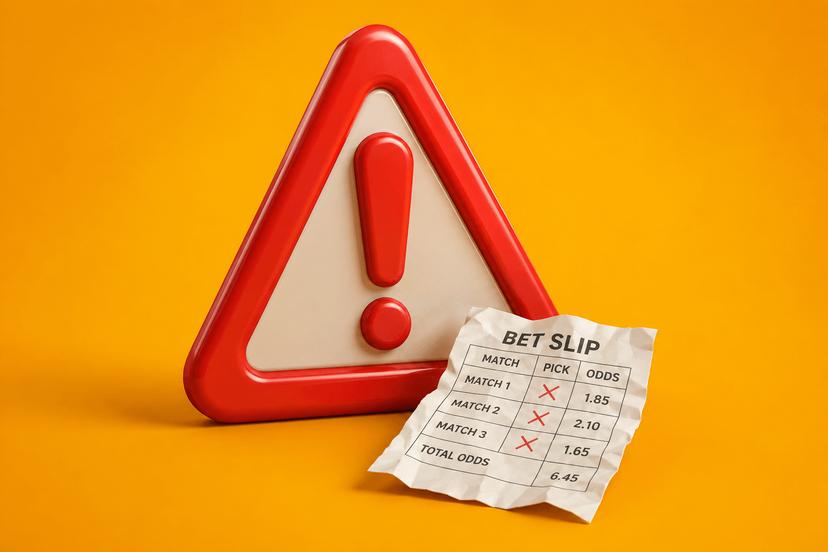







What Every Closing Line Says About the Bets You Place

Your win-loss record is lying to you.
Not intentionally, it just does not have enough information. Two bettors can go 55-45 over the same month on the same sports, and one of them is sharp while the other is running hot and heading for a correction.
The difference between them has nothing to do with results. It has everything to do with the numbers they bet compared to where the market eventually settled.
That gap, between the price you got and the price the market closed at, is called closing line value.
It is the metric that professional bettors use to evaluate every single wager they place on Jackpot.bet, and it tells a cleaner story about betting quality than wins and losses ever will.
What Is Closing Line Value?
The closing line is the final set of odds available on a market just before the event begins. It represents the market's most refined and accurate assessment of the true probability at that point, incorporating sharp money, public action, injury news, and every other piece of information the sportsbook has processed since the line opened.
Closing line value, or CLV, measures the difference between the odds you bet and where the line eventually closed.
-
Positive CLV - you got a better number than the closing line. You bet a team at -3 and the line closed at -4.5. The market moved in your favor after you placed the bet, confirming the line was soft when you took it.
-
Negative CLV - the line moved against you. You bet -7 and it closed at -5. Anyone who waited got a better number than you did.
A single bet with a negative CLV is not a disaster. A consistent pattern of negative CLV across hundreds of bets is a serious problem, it means you are systematically getting worse numbers than the market eventually settles on.
Why CLV Matters More Than Your Win-Loss Record
A coin flip bettor who runs hot for 30 games looks like a skilled bettor on their results sheet. CLV exposes the truth faster.
The closing line is the sharpest estimate of true probability available. By game time, the most informed money in the market, professional bettors, syndicates, algorithms, has pushed the line toward its accurate value.
If you consistently beat that number before it gets there, the market is confirming that you found value.
If you consistently lose to it, the market is telling you that the bets you placed were already stale by the time the game started.
This is why sportsbooks monitor CLV closely. They do not limit players purely for winning, plenty of recreational bettors win short runs.
They limit players who consistently show positive CLV, because positive CLV at scale predicts long-term profit. If the sportsbook's own sharpest tool, the closing line, keeps getting beaten by the same account, that account has an edge.
Win-loss records need hundreds of bets to stabilize due to variance. CLV gives you a meaningful read on betting quality far sooner.
How to Calculate CLV
The simplest way to track CLV is in points or cents.
Spread example: You bet the Chiefs -2.5 on Tuesday. The line closes at -4 on Sunday. You have 1.5 points of positive CLV, you only need Kansas City to win by more than 2.5, while anyone who bet later needs them to cover 4.
Moneyline example: You bet an underdog at +160. The line closes at +130. You have 30 cents of positive CLV, a $100 win at your price returns $160 versus $130 for anyone who waited.
For a more precise calculation, convert both odds to implied probability and measure the gap:
|
Your Bet |
Closing Line |
Implied Prob at Bet |
Implied Prob at Close |
CLV |
|
+160 |
+130 |
38.46% |
43.48% |
+5.02% |
|
-110 |
-120 |
52.38% |
54.55% |
-2.17% |
|
-3 (-110) |
-4.5 (-110) |
52.38% |
52.38% |
+1.5 pts |
The implied probability method strips out the vig and gives a cleaner picture of how much your number differed from the market's final opinion.
Positive vs Negative CLV - What Each One Tells You
Not all CLV is created equal. The size of the move matters, but so does where the move happened.
In NFL betting, the spread crossing the key number of 3 is worth dramatically more than a move of the same size elsewhere.
Betting a team at -2.5 that closes at -3.5 is worth approximately three times more CLV than betting -7.5 that closes at -8.5, even though both represent a one-point move.
More games end with a margin of exactly 3 than any other number, so the position on either side of that number has outsized real-world impact.
This is why tracking raw points of CLV without context can mislead. A half-point move through a key number in the NFL can be worth more than a full-point move in college basketball or a two-point move in a lower-volume soccer market.
|
CLV Type |
What It Signals |
|
Consistent positive CLV |
You are finding value before the market does, a strong long-term edge indicator |
|
Occasional positive CLV |
Normal variance, not yet meaningful without a larger sample |
|
Consistent negative CLV |
You are regularly getting worse numbers than late bettors, a warning sign |
|
Consistent negative CLV on key numbers |
The most damaging pattern, you are on the wrong side of the most impactful moves |
How to Consistently Beat the Closing Line
The market does not stand still after you place a bet, here is how to stay ahead of it.
Bet Early on Soft Opening Lines
Opening lines are set before the full weight of sharp money has hit the market. Sportsbooks release early numbers with wider margins because the line has not yet been refined.
Betting early, especially on less-publicized markets or mid-week NFL lines, gives you the best chance of getting a number before sharps push it to its accurate closing price.
Line Shop Before You Bet
Line shopping and CLV are directly linked. If you take the best available number across multiple books, you give yourself a structural advantage over the closing line before the game even starts.
A bettor who consistently takes -105 while others take -110 on the same position is building a positive CLV by default.
Act on New Information Quickly
Injury news, lineup changes, and weather updates create temporary mispricing windows. The market adjusts fast, within minutes of breaking injury news, lines move to reflect the new reality.
Bettors who act on credible information before the books update their numbers capture genuine CLV that is not available to anyone who bets later.
Avoid Late Public-Heavy Markets
The closer to game time, the more public money has hit the market, particularly on popular teams and high-profile matchups.
Public action tends to inflate favorites and popular teams, pushing lines away from fair value. Betting into those markets late means betting a line that has already moved against the sharp side and toward the public side.
How to Track Your CLV
The process is straightforward. For every bet you place, record two numbers: the odds at the time of your bet, and the closing odds on that same market just before the event starts.
For every bet, log the date, the event, what you bet, the odds you took, and the closing odds once the market settles.
Add a final column for the CLV result, positive or negative, in points for spreads and cents for moneylines. After 100 bets, the picture becomes clear.
After 100 bets, calculate the percentage of wagers that beat the closing line. A rate above 50% is positive.
A rate consistently above 55% over a large sample is a strong indicator of genuine edge. Below 50% consistently suggests a systematic problem with timing, line selection, or both.
Do not draw conclusions from fewer than 100 bets. Variance over small samples is large enough to make a losing approach look profitable and a winning approach look broken.
Conclusion
Closing line value does not care how many bets you won last month. It cares whether you got better numbers than the market's final price, and over a large enough sample, that distinction separates bettors with a genuine edge from bettors who are winning on variance and do not know it yet.
Bet early on soft lines, shop the best available number on every wager, act fast on new information, and track the closing line on every bet you place. The results will take care of themselves if the process is right.
Frequently Asked Questions
What does it mean to beat the closing line?
It means the odds you got were better than the final market price just before the event started. If you bet a team at +150 and the line closed at +130, you beat the closing line by 20 cents, your position was more favorable than anyone who bet later.
How many bets do I need before CLV is meaningful?
At least 100 bets before drawing any conclusions. Variance over smaller samples is large enough to make poor betting look profitable and sharp betting look broken. The signal in CLV only becomes reliable at scale.
Is positive CLV a guarantee of profit?
No, positive CLV means your bets are consistently placed at better numbers than the closing line, which is a strong indicator of long-term edge. Individual bets with positive CLV still lose, and short runs can go against you.
Does CLV apply to all sports and bet types?
Yes, though the calculation differs slightly. Spread CLV is measured in points, moneyline CLV in cents or implied probability percentage. Futures and props can also be tracked but carry wider closing line variance due to lower market efficiency and less sharp action.