What is a "Catchweight" Bout in UFC/Boxing and How Does it Affect Odds?
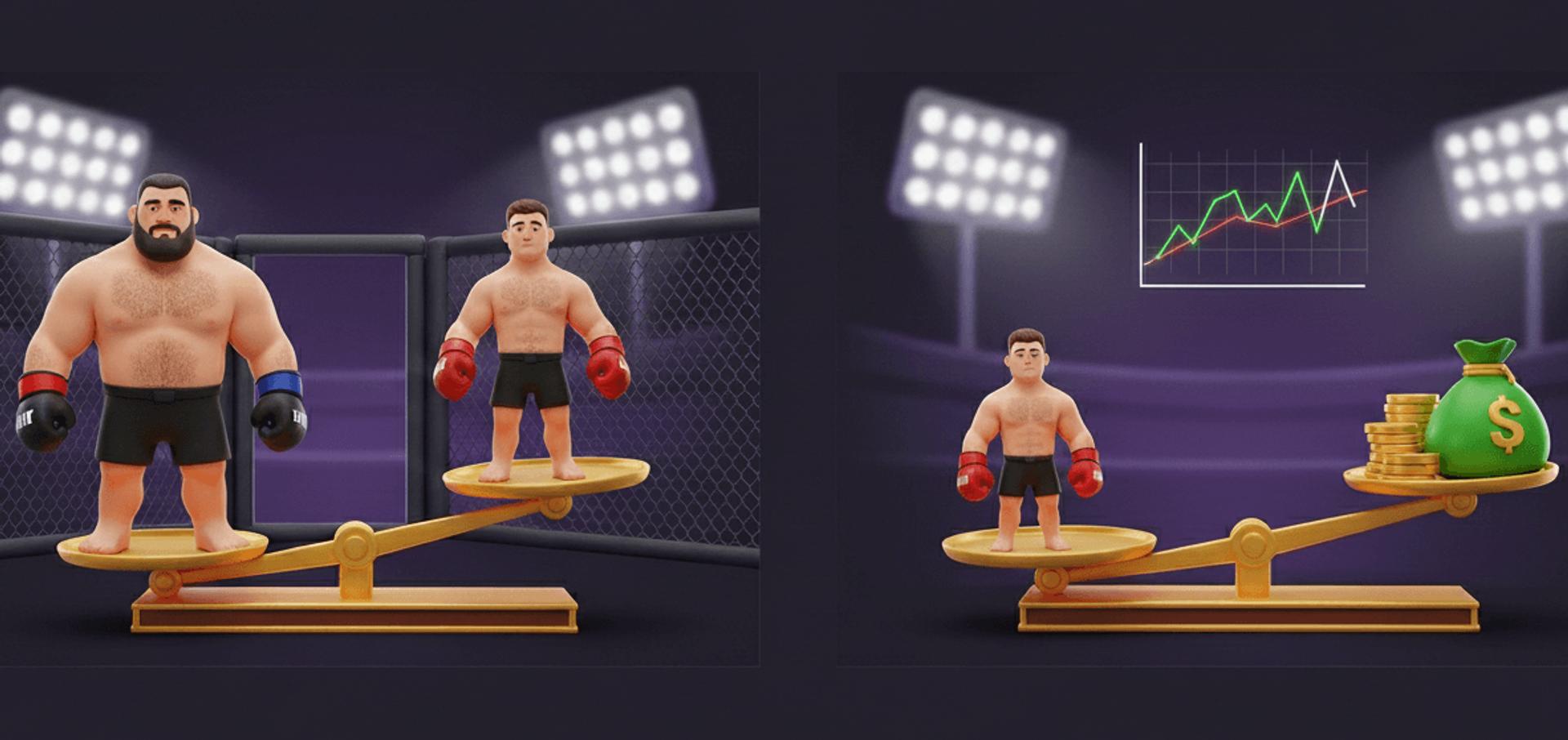
A catchweight UFC bout appears whenever two fighters agree to compete outside a standard weight class.
It can happen after a missed weigh-in, a short-notice matchup, or a negotiated limit that helps both athletes avoid a difficult cut.
Such arrangements are common in MMA and boxing, yet many bettors overlook how they reshape expectations, strategy, and the odds themselves.
If you’re learning how to bet on MMA, to know the catchweight rules is essential. These matchups influence pre-fight numbers, live markets, and the way oddsmakers price risk long before the fighters step into the cage.
What “Catchweight” Means - Definition & Background
A catchweight bout refers to any fight held at an agreed limit that does not match an official weight class. In both MMA and boxing, it acts as a middle ground when fighters cannot, or choose not to, compete at the traditional divisions listed for the event.
Several situations create a catchweight. At times, a fighter misses the official limit during weigh-ins, and the opponent agrees to continue under revised terms.
In other cases, both camps negotiate a catchweight before the bout is signed, especially when one athlete is moving between divisions or accepting the fight on short notice.
This agreement is strictly for the single contest; it does not create a new division, and it does not alter any formal rankings.
The purpose remains the same across combat sports: ensure the fight can take place safely without placing either competitor at an unreasonable disadvantage.
When this happens in the UFC, it also brings added complexity for bettors, since nonstandard limits can influence performance, preparation, and the way oddsmakers shape the market.
How Catchweight Works in Practice (Weigh-ins, Penalties, and Rules)
Catchweight bouts usually arise during weigh-ins. In the UFC, fighters must meet the upper limit of their division the morning before the event.
If someone comes in heavy, the opponent can accept or decline the matchup. When they agree to continue, the bout shifts to a catchweight, and the overweight fighter typically surrenders a portion of their purse.
These fights follow normal rules, but the context changes. A tough weight cut can drain stamina, while a heavier fighter may rehydrate and regain an advantage.
Title fights rarely proceed under catchweight terms, since missing weight usually voids championship eligibility.
For bettors on Jackpot.bet these quick adjustments often signal shifts in preparation, motivation, and expected performance.
Catchweight in Boxing vs. MMA - Key Differences
Catchweight serves a similar purpose in both sports, but its role varies slightly between boxing and MMA. In boxing, catchweight limits are often negotiated well in advance to create marquee matchups between fighters from different divisions.
These agreements help level the playing field or bring two high-profile names together without forcing either into an extreme cut.
In MMA, catchweight is more often a contingency than a promotional tool. Short-notice bouts, difficult cuts, or missed weigh-ins commonly trigger the adjustment.
Since MMA fighters rely heavily on rehydration and grappling strength, even a small shift in weight can influence power, balance, and durability.
As a result, bettors must pay close attention to how each athlete typically handles weight changes, since performance can fluctuate more sharply than in boxing.
Catchweight bouts in both sports remain non-title contests unless the agreed number matches an official championship limit. For betting purposes, this means motivations, preparation cycles, and risk profiles may differ from standard divisional fights.
Why Catchweight Matters for Bettors and Odds
Catchweight bouts introduce uncertainty that oddsmakers must account for. A fighter who misses weight may enter the cage heavier and better hydrated, which can boost power and durability. At the same time, a difficult or failed cut can signal poor preparation, reduced stamina, or a disrupted training cycle.
Because these outcomes point in opposite directions, the market often reacts quickly once weigh-in results are confirmed.
For bettors, the key is to learn how each fighter handles weight changes. Some athletes consistently perform well in catchweight scenarios, while others show clear dips after aggressive cuts.
Historical patterns matter here: a fighter who frequently struggles on the scale might carry long-term conditioning issues, and oddsmakers will adjust their prices accordingly.
These dynamics also influence live markets. If a heavier fighter begins fast but fades early, UFC live betting odds can swing dramatically. Likewise, if a drained opponent shows signs of slowing, knockout or inside-distance props may shorten.
In both cases, catchweight shifts the baseline expectations that underpin every sportsbook number, making weigh-ins just as important as the fight itself.
Betting on Catchweight Bouts on Jackpot.bet
Catchweight bouts appear on UFC betting lines the same way standard matchups do, but their context requires closer inspection.
On Jackpot.bet, markets update quickly once weigh-in results are official, and sudden weight changes can reshape the opening numbers. A fighter who comes in heavy might see their price shorten slightly, while the opponent could drift if bettors expect a size disadvantage.
Before placing a wager, consider a fighter’s history with weight cuts, late-notice bouts, and performance at nonstandard limits. Some athletes thrive when they avoid a severe cut, while others rely on speed and conditioning that may fade if they move up.
Checking past catchweight results, typical rehydration patterns, and how often a fighter fades late can provide valuable clues.
Catchweight also affects prop markets. Grapplers may benefit from extra weight during scrambles, while strikers often rely on speed that suffers when cuts go poorly.
When watching line movement on Jackpot.bet, these factors help explain why odds shift even when both fighters look physically similar on fight night.
Because catchweight introduces volatility, disciplined bettors often wait until the market reacts to weigh-in news.
Risks and Variables Unique to Catchweight Bouts
Catchweight fights carry more volatility than standard divisional matchups. A fighter who cuts too aggressively may enter the cage with diminished stamina, slower reactions, or reduced durability.
On the other hand, a competitor who comes in heavy can rehydrate to a noticeably larger frame, creating power or grappling advantages that don’t always appear on paper.
There is also greater risk of last-minute disruption. Bouts can be cancelled if one side refuses the new terms, and even when the fight proceeds, motivation can shift.
Some fighters perform well after missing weight; others struggle with the pressure and penalties attached.
For bettors reviewing UFC betting lines, these psychological and physical variables are part of the analysis, and they explain why catchweight markets often swing more sharply than typical matchups.
Conclusion
Catchweight bouts sit outside traditional weight classes, but they play a significant role in both UFC and boxing. They arise from missed weigh-ins, short-notice matchups, or negotiated limits designed to keep a fight intact.
Although the rules inside the cage remain unchanged, the conditions surrounding preparation, rehydration, and motivation can shift dramatically.
For bettors, this means catchweight contests require closer attention than standard divisional fights. Weigh-in behavior, past performance at nonstandard limits, and late-market movement often reveal how each athlete is handling the change.
Such context shapes the opening numbers, influences live markets, and explains why catchweight odds may look different from familiar UFC betting lines.
Frequently Asked Questions
What does catchweight mean in UFC?
A catchweight bout is contested at an agreed limit outside the official weight classes, often due to a missed weigh-in or a negotiated number.
It allows the fight to proceed without forcing either athlete into an unsafe cut, which is why commissions and camps rely on it in last-minute scenarios.
Can a UFC title be contested at catchweight?
No. If a fighter misses weight, the bout may continue, but the championship is usually removed from play.
Even when both athletes make weight, titles are only sanctioned at official divisional limits, ensuring consistency across rankings and historical records.
Does missing weight always lead to a catchweight fight?
Not always. The opponent must agree to continue, and if they decline, the event may shuffle or cancel the bout entirely.
When the fight does go ahead, the overweight fighter typically pays a penalty, which compensates the opponent for accepting the risk.
Do catchweight bouts affect fighter rankings?
Generally, they do not. Because catchweight fights take place outside standard divisions, their outcomes rarely shift official rankings.
However, strong performances can still influence matchmaking decisions and future opportunities within a fighter’s main weight class.