







Sports Betting Mistakes - The Most Common Errors and How to Avoid Them
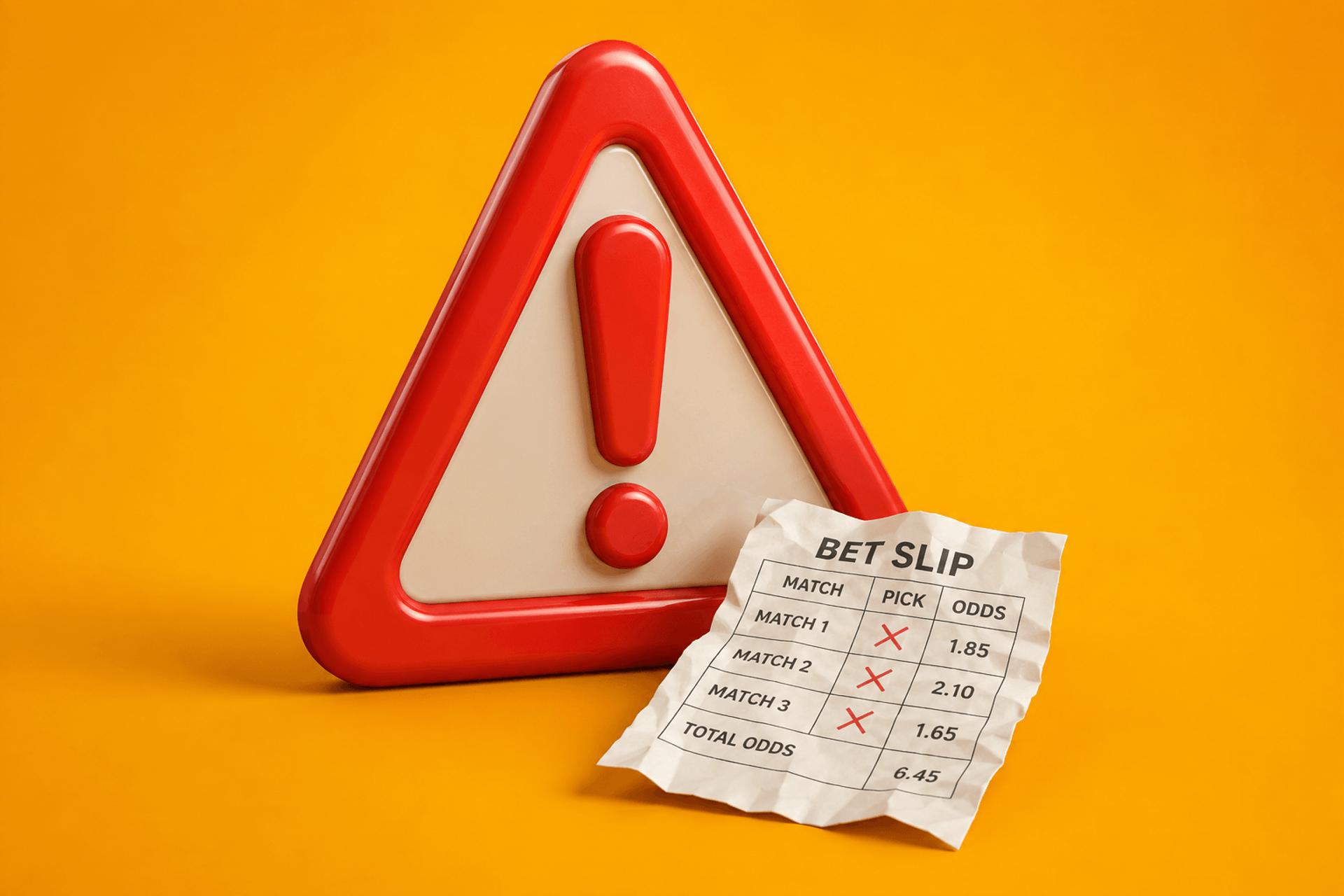
Most sports betting losses aren't down to bad luck. The same patterns show up across every sport and every market, draining bankrolls from bettors who never stop to identify them.
Chasing losses, ignoring value, betting on feel rather than logic, skipping the basics of staking, these are the errors that separate bettors who last from those who don't.
None of them are complicated to fix, and none of them require advanced analysis to avoid.
Spotting them in your own betting is the first step toward cleaner, more disciplined sessions on the Jackpot.bet sportsbook.
Betting Without a Staking Plan
Sizing bets by feel, larger when confident, smaller when unsure, different depending on the day, introduces a randomness that makes it impossible to evaluate your own performance.
A losing month could reflect bad picks or bad sizing. Without consistent records, the distinction is invisible.
A flat staking plan, where every bet risks the same fixed percentage of your bankroll, removes that variable entirely.
It won't make losing bets win, but it makes your results measurable and your improvement trackable.
Bankroll management is the foundation everything else builds on, skipping it undermines every other adjustment you make.
Chasing Losses
The most damaging pattern in sports betting. After a losing run, the instinct is to bet bigger on the next game to recover faster.
It feels logical, one bigger win cancels several smaller losses. In practice, bigger bets during a losing run accelerate the decline rather than reversing it.
The losing run doesn't become more likely to end because it's already been going on. Each event settles independently of what came before it.
Doubling down after losses is how small deficits turn into significant ones, and it's exactly the kind of thinking the hot hand fallacy exploits in the other direction. Stick to your staking plan regardless of recent results, that's the point of having one.
Ignoring Value and Backing Odds-On Favourites
Short-priced favourites feel safe. They win more often than not, which makes backing them feel like a reliable strategy. The problem is that price and value are different things.
A team priced at 1.25 needs to win 80% of the time just for you to break even over the long run.
If they win 75% of the time, which might still feel like a strong record, you're losing money on every bet.
Implied probability is the number that matters, not how likely a team feels to win.
Backing odds-on favourites consistently without assessing whether the price reflects the true probability is one of the most common ways casual bettors lose money without realising it.
Betting on Too Many Markets
Volume multiplies your exposure to the bookmaker's margin. Every bet you place includes a vig built into the odds.
Placing 15 bets a day across markets you haven't analysed properly means 15 separate instances of that margin working against you.
Focusing on a smaller number of well-researched bets in markets you actually follow consistently outperforms scattershot volume.
The bettors who sustain results over time are selective about where their edge, if any, actually exists.
Letting Emotion Drive Decisions
Two versions of this mistake cost bettors the most money. The first is backing your own team regardless of the odds, loyalty is not an analytical edge, and the market doesn't care which side you support.
The second is tilting after a bad run, placing bets you wouldn't make with a clear head just to feel like you're doing something about it.
Both are forms of emotional decision-making, and both are covered in detail in the sports betting psychology patterns that define why most bettors lose.
The fix is mechanical, set rules for when you bet and when you don't, and follow them regardless of how a recent session went.
Not Shopping for the Best Odds
Taking the first line you see without comparing across markets costs real money over time. The difference between 1.90 and 1.95 on the same outcome might look trivial on a single bet.
Across hundreds of bets, that gap compounds into a significant difference in total returns.
Line shopping is one of the simplest adjustments a bettor can make and one of the most consistently underused.
Getting the best available price on every bet you place is the closest thing to a guaranteed improvement that doesn't require any analytical edge at all.
Overloading Parlays
Parlays are entertaining and occasionally produce big returns, that's not in dispute. The problem is treating them as a core betting strategy rather than an occasional format.
Each additional leg compounds the bookmaker's margin and drops the probability of the ticket winning sharply.
A three-leg parlay at standard odds carries roughly 12–15% winning probability at best. Add more legs and that number drops fast, while the vig on the full ticket grows.
Parlay betting works as entertainment with a small portion of your bankroll. Building a staking plan around them doesn't.
Conclusion
The mistakes that drain sports betting bankrolls are the same patterns appearing in different forms across different bettors.
No staking plan, chasing losses, backing price over value, betting too many markets, emotional decisions, skipping odds comparison, and over-relying on parlays. Each one is fixable independently.
Fixing all of them doesn't guarantee profit, but it removes the avoidable losses that make the gap between you and the bookmaker wider than it needs to be.
Head to the Jackpot.bet sportsbook and apply what you know.
Frequently Asked Questions
What is the biggest mistake in sports betting?
Chasing losses is the single most damaging pattern. Increasing bet sizes after a losing run to recover faster accelerates the decline rather than reversing it. Every event settles independently, a losing streak doesn't become more likely to end just because it's been going on.
How do I stop making emotional bets?
Set mechanical rules before you start, a fixed stake size, a maximum number of bets per day, and a clear condition for when you don't bet at all. Following those rules regardless of recent results removes the moments where emotion steps in to make decisions your analysis wouldn't support.
Are parlays worth betting?
As entertainment with a small portion of your bankroll, yes. As a core strategy, no. Each additional leg compounds the vig and drops the probability of winning sharply. The expected return on a parlay is lower than placing the same bets individually.
Does shopping for better odds really make a difference?
Yes, significantly over time. The difference between 1.90 and 1.95 on the same outcome adds up across hundreds of bets. Getting the best available price on every bet is one of the simplest and most consistent improvements available to any bettor regardless of their analytical ability.