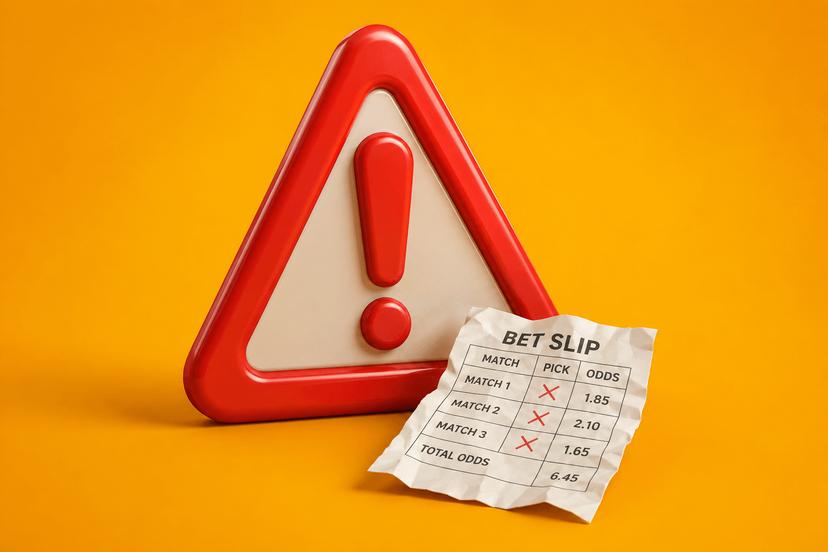







The Hot Hand Fallacy - Why Winning Streaks Don't Mean What You Think
You're four spins up. The bets are climbing. The confidence is real. Something in your gut says this is your session, keep going, press harder, ride it out. That feeling has a name: the hot hand fallacy.
It's the belief that a winning streak makes the next win more likely, and it's one of the most common and costly mental errors in gambling.
It shows up at the slot reels, on the roulette table, in sports betting, and in live casino games. On Jackpot.bet and everywhere else, the math doesn't care how your last ten spins went.
What Is the Hot Hand Fallacy?
The hot hand fallacy is the mistaken belief that a person or game on a winning streak is more likely to keep winning, that past success increases the probability of future success in situations where outcomes are actually independent.
The term comes from basketball. A 1985 study by Gilovich, Vallone, and Tversky examined NBA shooting data and found that players and fans alike believed a shooter who'd made several consecutive shots had a "hot hand" and was more likely to convert the next attempt.
The data said otherwise, consecutive shot outcomes were statistically independent. Making three in a row didn't change the probability of making the fourth.
The concept transferred directly to gambling because the logic is identical. In any game governed by a random number generator, slots, roulette, dice, every outcome is independent of everything that came before it.
The machine has no memory. The wheel has no memory. The cards have no memory. A five-spin winning run at the reels doesn't make the sixth spin more likely to pay out. The probability resets completely with every play.
The Psychology Behind It
The hot hand fallacy doesn't arise from poor judgment — it arises from two cognitive patterns that usually serve us well but misfire completely in random environments.
The Representativeness Heuristic
People expect short sequences to look like the broader average. A string of wins feels unrepresentative of randomness, so the brain interprets it as meaningful, a signal that something real is happening rather than normal chance variation.
Streaks feel like they must mean something because truly random sequences can look surprisingly lumpy to the human eye.
The Illusion of Control
After a winning run, players often feel they've found a rhythm or cracked a pattern. This sense of influence over genuinely random outcomes is false, but powerful, and it's what drives bets to climb during hot runs even when no logical reason exists to raise stakes.
A landmark study by Croson and Sundali (2006) tracked real roulette players and found consistent evidence of this in action: gamblers placed larger bets and bet on more numbers after wins, behaving as though recent success made future wins more probable.
Hot Hand Fallacy vs. Gambler's Fallacy - Two Opposite Mistakes
These two biases are mirror images of each other. Both are wrong for exactly the same reason, a fundamental misunderstanding of statistical independence, but they lead to opposite predictions about what happens next.
|
Hot Hand Fallacy |
Gambler's Fallacy |
|
|
Belief |
Streak will continue |
Streak must end |
|
Action |
Bet more, stick with what's working |
Switch, bet against the streak |
|
Example |
"Red came up four times, keep betting red" |
"Red came up four times, black is due" |
|
Root error |
Past wins increase future probability |
Past wins decrease future probability |
|
Reality |
Each outcome is independent |
Each outcome is independent |
Same logical error, opposite directions. A bettor could commit both in the same session without realising it, believing they're on a hot streak at slots but that the roulette wheel is "due" for a colour change. Neither belief holds up. Our Gambler's Fallacy breakdown covers the other side of this coin in full.
How It Shows Up in Casino Games
The hot hand fallacy is one of the most consistent patterns in casino play. It surfaces across different game types, but the mechanism is always the same, past results creating a false sense of what comes next.
Slots
"This machine is paying out" is one of the most common thoughts a slot player has during a good run, and one of the least accurate.
Every spin on a certified slot is determined by an RNG that produces a new, independent result each time.
A slot that just paid a significant win is no more likely to pay on the next spin than one that hasn't paid in hours. The machine has no record of what came before.
Roulette
Players track the results board looking for hot numbers or dominant colours. That board exists for entertainment, not prediction.
A roulette wheel has no mechanism to continue any sequence, each spin carries identical probabilities to every other spin, regardless of what the board shows.
Live Casino
The social environment amplifies the effect. Watching a run of results with a live host and other players reacting makes patterns feel more real than they are.
The independence that governs RNG slots governs every spin of a live wheel too, the format changes, the math doesn't.
How It Shows Up in Sports Betting
Sports betting is where the hot hand question gets genuinely complicated, because unlike slots and roulette, sport involves skill, and some streaks are real.
A football team winning eight straight may genuinely be in superior form. A tennis player on a long winning run may have fixed a technical flaw.
In skill-based environments, past performance can carry legitimate predictive weight because the quality of the participant is a real variable.
The fallacy kicks in when bettors back a team purely because they're on a run, without examining the actual conditions, fixture difficulty, injuries, form of opposition. Momentum alone is not an edge.
The most costly version is raising personal stakes during a winning run not because the analysis improved, but because the bettor feels hot. A streak of correct picks does nothing to improve the quality of the next one.
How to Spot It in Your Own Play
The hot hand fallacy is easiest to catch when you ask yourself why you're making a decision.
Are you increasing bet sizes after a run of wins with no reason other than the feeling that you're on fire? Are you staying on a slot machine past your planned session because it "feels like it's paying"?
Are you backing the same team three weeks in a row purely because they've won their last four?
Are you choosing a live roulette number because it's hit twice recently?
These are hot hand moments. Noticing them means you pause long enough to ask if there's an actual reason behind the decision or just a feeling.
In random games, the honest answer is almost always the latter. Making the distinction is what separates reactive play from deliberate play.
Conclusion
Winning streaks feel meaningful because they are meaningful, to your experience, your mood, and your confidence.
What they don't do is change the mathematics of what comes next. In any game built on independent random outcomes, the past has no vote on the future.
The slot RNG doesn't remember your last five wins. The roulette wheel doesn't know it's been landing red. Every outcome starts from zero.
The hot hand fallacy is one of the most human errors in gambling, and one of the most expensive.
Recognising the feeling for what it is gives you the space to make the next decision clearly, rather than riding a wave that the numbers were never actually generating.
Frequently Asked Questions
What is the hot hand fallacy in simple terms?
It's the belief that being on a winning streak makes you more likely to keep winning. In random games like slots or roulette, it's false. Every outcome is independent and unaffected by what came before.
Does the hot hand fallacy apply to slots?
Yes. Every slot spin is generated independently by an RNG. A machine that just paid out is statistically identical to one that hasn't, there's no such thing as a hot or cold slot machine.
What is the difference between the hot hand fallacy and the gambler's fallacy?
Both misread random sequences, but in opposite directions. The hot hand fallacy says a streak will continue; the gambler's fallacy says a streak must end. Both are wrong because random events don't follow streaks in either direction.
Can winning streaks ever be real in gambling?
In skill-based games, poker, sports betting with genuine analysis, certain card games, streaks can reflect real performance differences. In purely random games like slots, roulette, and dice, streaks are coincidence. The math behind the next outcome is always the same.