World Cup Knockout Stage Betting: How the Rules Change Everything
The group stage and the knockout stage are not the same betting environment. The format shifts, the market rules change, and strategies built around motivation, dead rubbers, and qualification scenarios become irrelevant the moment the round of 32 begins.
From that point, every match is single-elimination, every team is fully committed, and one result sends half the participants home.
World Cup knockout stage betting on Jackpot.bet rewards players who understand how the rules differ, particularly around 90-minute settlement, extra time, and which markets actually cover the full match.
This is what separates informed knockout bets from expensive assumptions.
How the 2026 Knockout Format Works
The 2026 World Cup introduces a Round of 32 that no previous tournament has used.
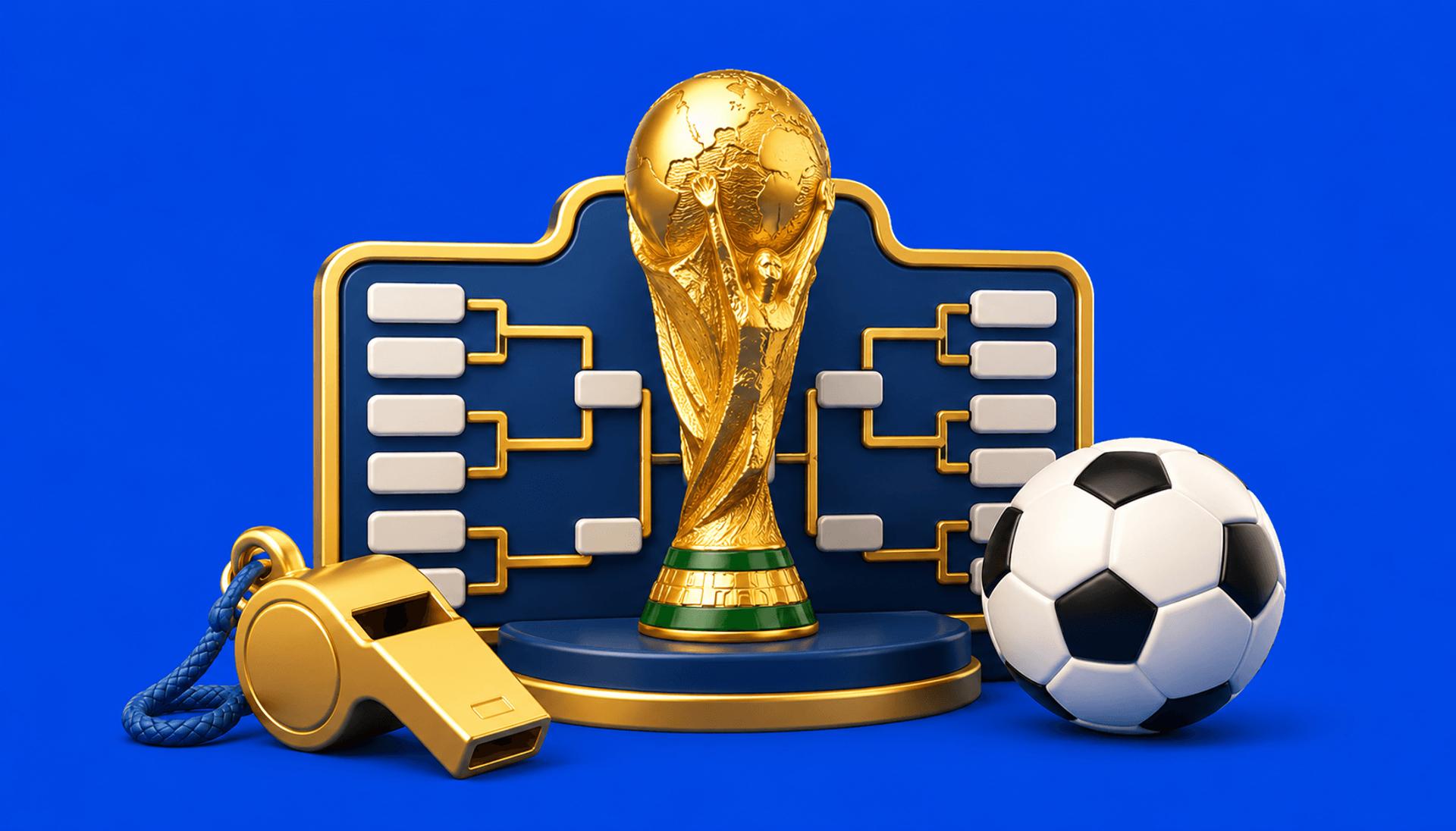
After the group stage, 32 teams enter the single-elimination play, lose and go home, from the Round of 32 all the way through to the Final at MetLife Stadium on July 19.
To lift the trophy, a team must win seven consecutive matches, one more than any previous World Cup.
That extra round adds physical attrition that benefits deeper squads over star-dependent sides. The expanded World Cup bracket also means the Round of 32 will feature mismatches the knockout stage hasn't seen before, sides that scraped through as best third-place finishers facing teams that won their groups comfortably.
The 90-Minute Rule - The Most Important Thing to Know
Most match markets, moneyline, over/under, both teams to score, correct score, and player props, settle on 90 minutes plus stoppage time only.
A draw after regulation is a valid result for settlement purposes. Extra time and penalties happen after the bet has already been graded.
Back England to win on the standard moneyline, England and Germany draw 1-1, England win on penalties, the bet loses.
The moneyline settled at 90 minutes as a draw. This applies across every knockout stage market that doesn't explicitly state otherwise, always confirm which period a bet covers before placing it in World Cup knockout rounds.
The "To Advance" Market - What It Is and When to Use It
The to advance bet covers the full match, regulation, extra time, and penalties, and settles on which team progresses regardless of how the winner is determined. If England wins on penalties after a 1-1 draw, "England to advance" wins.
The tradeoff is price. The odds are shorter than the moneyline because the market covers extra time and shootouts on top of regulation.
Use it in tight matches between evenly matched sides where extra time is a genuine possibility.
In matches with a clear quality gap, the moneyline delivers better value, the to advance price is compressed without meaningful benefit.
Markets That Work Differently in the Knockout Stage
The core match betting markets are all available throughout the World Cup knockout rounds, but several behave differently under the pressure of single-elimination play.
Draw No Bet
Draw no bet removes the draw entirely. Back a team and if the match ends level after 90 minutes, the stake is refunded, the only losing outcome is the team you backed being beaten in regulation.
It sits between the three-way moneyline and the to advance market in terms of coverage and price.
Draw no bet is consistently underused in the knockout rounds, and the pricing reflects that.
Because public money concentrates on the standard moneyline and the to advance market, draw no bet sits at softer odds relative to the actual probability of the draw. particularly in tight fixtures between sides of similar quality where the 90-minute result is genuinely uncertain.
Over/Under Goals
Knockout matches are historically lower-scoring than group stage fixtures. Single-elimination pressure produces conservative tactical setups, neither team wants to be the side that gifts the other a lead, and defensive solidity becomes the priority over the attacking intent that characterizes open group stage games.
The under 2.5 goals lands at a higher rate in knockout ties than in group stage matches at the same line, particularly in the Round of 32 where the fear of elimination concentrates both managers on not losing rather than winning by a margin.
Penalty Shootout Markets
Penalty shootout betting is available as a separate market, which team wins if the match reaches penalties. It's a high-variance line with limited edge regardless of preparation.
Penalty shootout outcomes have no consistent predictors across tournaments, and the pricing tends to sit close to even money for most matchups. It's worth knowing the market exists, but it's not a core strategy position for the knockout stage.
How Live Betting Changes in Knockout Matches
One goal in a knockout tie reshapes the entire market immediately.
The trailing team must chase the game, which shifts their tactical setup and changes both the goal totals and match result lines in seconds, sometimes beyond what the actual quality gap justifies.
Extra time creates a second live betting window. If a match reaches 90 minutes level, the market resets for the additional period with new odds reflecting fatigue and adjusted tactics.
The sharpest in-play opportunities typically arrive right after a goal or red card, when the market has moved faster than the shift in match dynamics warrants.
Knockout Stage vs Group Stage - Key Betting Differences
The group stage is shaped by motivation, qualification scenarios, dead rubbers, and rotation. Those factors disappear entirely from the round of 32 onward.
In the knockout stage every player is available, every manager sets up to win, and no team can afford a passive approach.
The form variations, tactical conservatism, and lineup management that create value in group stage betting become irrelevant.
What replaces them is the 90-minute rule, the to advance market distinction, defensive tactical setups in tight ties, and live market dynamics that respond sharply to in-game events.
World Cup knockout stage betting is a different discipline applied to the same tournament.
Conclusion
Seven matches, one trophy, and no margin for error from the round of 32 through to July 19.
The knockout stage is the sharpest betting environment in the tournament, tighter margins, faster live markets, and a settlement structure that catches casual bettors off guard on the 90-minute rule.
Learn which market covers which period, use draw no bet in tight ties where the price is soft, and respect the under in the early knockout rounds where defensive setups dominate. All knockout stage markets are live on Jackpot.bet throughout the tournament.
Frequently Asked Questions
Do knockout stage bets include extra time and penalties?
Most match betting markets, moneyline, over/under, both teams to score, and player props, settle on 90 minutes only. A draw after regulation is a valid result regardless of what happens in extra time and penalties.
The "to advance" market is the exception, it covers the full match including extra time and penalties and settles on which team progresses.
What is the "to advance" bet in the World Cup?
The to advance market settles on which team moves to the next round, regardless of how the match is decided. A team that wins on penalties after a 1-1 draw wins the to advance bet. The price is shorter than the standard moneyline win because the market covers extra time and shootouts on top of regulation.
Is the under a good bet in World Cup knockout matches?
Knockout matches are historically lower-scoring than group stage fixtures. Single-elimination pressure produces conservative tactical setups and the under 2.5 goals line lands more consistently in knockout ties than in open group stage games.
The early rounds of the bracket, particularly the Round of 32, are where the under carries the most value.
When does the 2026 World Cup knockout stage start?
The group stage runs from June 11 to June 27. The Round of 32 begins after the group stage concludes, with the knockout bracket running through to the Final at MetLife Stadium on July 19, 2026.