



The Near Miss Effect: Why Almost Winning Keeps You Playing Longer

Two matching symbols. The third stops one position off the payline.
You lost, but it doesn't feel like losing. It feels like you were close. Like the next spin might be the one. That feeling has a name, a body of neuroscience behind it, and decades of deliberate engineering underneath it.
The near miss effect is one of the most documented psychological phenomena in gambling, and on Jackpot.bet and every other platform, it shapes how players experience losses without most of them ever realising it's happening.
What Is the Near Miss Effect?
A near miss is a losing outcome that looks like it almost wasn't. Two jackpot symbols with the third stopping just off the payline.
A scratch card revealing two matches before the third. The roulette ball settling one pocket away from your number.
The result is a loss, identical in every practical sense to any other losing outcome, but the brain doesn't register it that way.
Near miss outcomes activate the same reward circuits as actual wins. Dopamine releases. Arousal rises. The sensation of being close to something produces biological markers nearly identical to actually getting it.
The RNG determined the result before the reels started moving, what looks like proximity is a visual representation of a decision already made. The brain processes it as evidence of progress regardless.
How Slot Machines Are Built Around It
Near misses in digital slots are not random byproducts, they are programmed outcomes. Modern video slots use virtual reel mapping, which controls where symbols appear on the visible reels independently of the actual probability distribution.
High-value symbols are programmed to land near the payline more often than pure chance would produce.
Research consistently points to around 30% of spins as the near miss frequency that sustains play longest, slot developers build to that number.
Sound design, reel deceleration, and screen animations are layered on top. The reels slow as they approach the payline.
A distinct audio cue plays when two symbols match. None of it changes the result, that was settled before any of it played out, but all of it deepens the emotional response to a manufactured almost-win.
The Psychology Behind It
The near miss effect doesn't work through a single mechanism. Three distinct psychological processes stack on top of each other, each amplifying the others.
Illusion of Progress
Near misses create the sensation that a win is approaching, that proximity to a winning outcome means you are getting closer to one.
The RNG has no memory and no trajectory. Two jackpot symbols on the first two reels don't influence what the third reel produces.
Each spin is statistically identical to the one before it. But the brain evolved to detect patterns and interpret proximity as progress, which is a useful instinct in most areas of life and a costly one at a slot machine.
Dopamine Loop
The same reward circuit that fires during an actual win fires during a near miss, just at a lower intensity.
The near miss rewards you enough to want more. It's the same mechanism behind variable reward schedules in social media: unpredictable near-outcomes sustain engagement better than consistent ones.
Combined with loss aversion, the near miss makes you feel like you lost something you nearly had, which hurts more than a clean miss, the effect compounds quickly.
Illusion of Control
Near misses feel more significant when the player has made a choice. Pressing spin at a specific moment, picking a machine, selecting a payline, any sense of agency amplifies the near miss response. A purely passive loss registers as noise. A loss that followed a decision feels like feedback, like evidence that a better decision next time could change the outcome. It can't.
But the gambler's fallacy and the near miss effect feed each other here, proximity feels like probability, and past decisions feel like they carry information about future results.
Where It Shows Up Beyond Slots
The near miss effect isn't confined to slot machines. The same psychological mechanism appears across different game types.
In roulette, the ball landing on a number adjacent to the one you bet on produces the same arousal response as a slot near miss, a loss that looks like it was close.
Scratch cards are structured around it: two matching symbols are visible before the third is revealed, building anticipation that a match will follow.
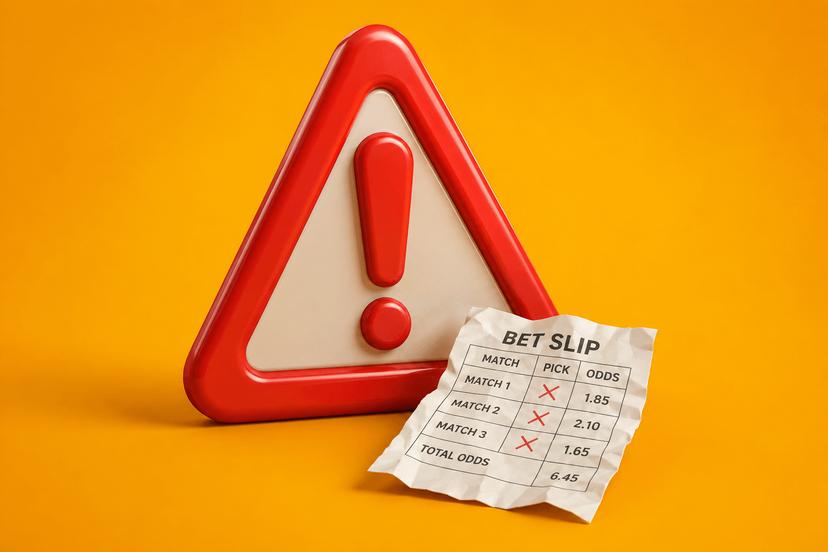
In sports betting, a last-minute goal that busts a parlay or covers a spread in the wrong direction creates the near miss emotional response, the bet almost worked, the loss feels contingent, and the next bet feels like the correction.
Why Near Misses Hit Harder Than Clean Losses
A clean loss, symbols that bear no resemblance to a winning combination, lands flat. There's nothing to process, no story to tell.
A near miss is different because it gives the brain material to work with. The loss aversion mechanism amplifies it further: a near miss doesn't just feel like losing, it feels like losing something you nearly had.
That's a psychologically distinct experience, closer to having something taken away than simply not receiving it, and it produces a stronger emotional response than an equivalent clean loss.
This is why near misses are more motivating than wins in terms of continued play. A win produces satisfaction and a natural stopping point.
A near miss produces frustration and an unresolved loop, the brain wants to close the gap, and the only available action is another spin.
The game offers no other resolution. That unresolved tension is what the 30% near miss frequency is calibrated to sustain.
How to Recognise It in Your Own Play
The near miss effect is easiest to catch in the decisions it produces rather than the feeling itself.
A session running longer than planned after a string of close calls. Bet sizes climbing because a win feels overdue.
Time spent replaying a spin mentally, working out what you should have done differently. These are the near miss effect doing exactly what it was designed to do, turning a random loss into a problem that feels solvable.
A near miss is a loss. The next spin carries identical odds regardless of what the previous reel sequence looked like.
Recognising the pull toward continuing as a manufactured response rather than a genuine signal is the most practically useful thing a player can take from understanding this effect, connecting naturally to both the sunk cost fallacy and the hot hand fallacy, both of which near miss situations tend to activate simultaneously.
Conclusion
The near miss effect is one of the most researched and most deliberately exploited phenomena in gambling design.
It’s a feature, tuned to a specific frequency that research shows keeps players engaged longest. Two symbols and a blank don't mean you're close.
The third reel doesn't remember the first two. Every spin starts from zero, with identical odds to every spin before it.
A loss that looks like a near win is still a loss, and to know that clearly, in the moment the third symbol lands, is the only real counter to an effect that was engineered specifically to override that knowledge.
Frequently Asked Questions
What is the near miss effect in gambling?
It's the psychological response to a losing outcome that structurally resembles a win, two matching symbols with the third just off the payline, or a ball landing adjacent to your number.
Despite being a loss, near misses activate the brain's reward circuits and increase motivation to continue playing.
Are near misses in slots programmed on purpose?
Yes. Digital slots use virtual reel mapping to make high-value symbols appear near the payline more frequently than pure probability would produce.
Near miss frequency of around 30% of spins is well-documented as the rate that maximises player engagement and session length.
Does a near miss mean a win is more likely on the next spin?
No. Each spin is an independent event determined by an RNG with no memory of previous results.
Two jackpot symbols on the first two reels have no influence on the third. The sensation of proximity is a psychological response to the visual outcome, not a mathematical signal about what comes next.
How does the near miss effect differ from the gambler's fallacy?
The gambler's fallacy is the belief that a losing streak makes a win statistically more likely. The near miss effect is the emotional response to an outcome that looked close to a win, it makes you feel like you almost succeeded, driving continued play through arousal and motivation rather than through a misreading of probability.